Most coding benchmarks test whether a model can pass unit tests. Experiment_1: Digital Reset was designed to test whether an unattended agent can art-direct a 3D scene from scratch: verify a live headless Blender MCP pipeline, assemble a native Rust + macroquad renderer, compose a massive daytime metropolis seen through a high-rise apartment window, choreograph a 20-second cinematic reveal, and unify the whole world under an F1 toon shader.
Eight isolated workspaces launched in parallel around 2:00 p.m. EDT on October 18, 2026. Five frontier model families—Claude Opus 5.5, Gemini 4 Argon, GPT-6 Astra, GPT-6.1 Sol, and Grok 4.7—ran across four agent harnesses (Claude Code, GitHub Copilot CLI, Codex, and Grok CLI), giving three same-model, different-harness pairs for Astra, Sol, and Grok.
01 — The briefThree unattended tasks—and only one mention of “cyberpunk”
Every workspace started with the same junctioned Shared Assets/ library (Kenney 3D kits and fonts), an isolated headless Blender 5.2.1 LTS MCP server, a local image/audio/voice tool server, and the exact same prompt pointing to Scenarios/experiment_1_spec.md:
Task 1 · Tool test: Verify Blender MCP works in your sandbox. Ensure you're able to build/run a Rust + macroquad native.
Task 2 · Intro Scene Slice: First person perspective. Looking out at an urban landscape from the window of a high-rise apartment. Character fixed in place but able to look (left/right/up/down) using mouse. Daytime. Large metropolis extending into the distance, mountains or other terrain at the very furthest edge. Do not artificially clip/end the scene. It should evoke scale. Smoke/fog allowed for farthest distance to aide in render if needed. Attention to detail is the goal here. Detailed buildings. Advertisements. Appearance of people/vehicles down below (even if only a simulation of such). Flying vehicles.
After about 20s, control is taken from the player and the camera moves a bit forward. Black bars enter from top and bottom of screen (cinematic bars). Center screen the words "Digital Reset: A Cyberpunk story" appear. Scene holds until ESC is pressed to end the simulation/scene and exit.
Task 3 · Toon/Stylized Rendering: Apply a toon/stylized renderer to the entire scene. This should be able to be activated at any time by pressing the F1 key to toggle. It should be available during any part of the experiment. The styling should aide in making the scene more uniform and consistent across any textures/surfaces used.
The task only mentions cyberpunk once—inside the title string at the end of Task 2. The rest of the prompt reads like an “urban landscape” requirement. The mention of flying cars and advertisements should hint in that direction, but I did not want a stereotypical pitch-black “neon city,” which is what models reflexively generate when you say cyberpunk—hence the bolded Daytime requirement. Whether a model could still evoke a cyberpunk atmosphere in broad daylight separated the top of the field from the middle.
Opus 5.5 takes the crown at 8.6; Gemini 4 Argon is right behind at 8.4
Each run was graded from 0 to 10 across five equally weighted categories: Styling, Creativity, Task Completion, Overall Coherence & Quality, and Speed (ranked from 10/10 for the fastest finisher down by rank across the eight peers, with 0/10 reserved for DNF).
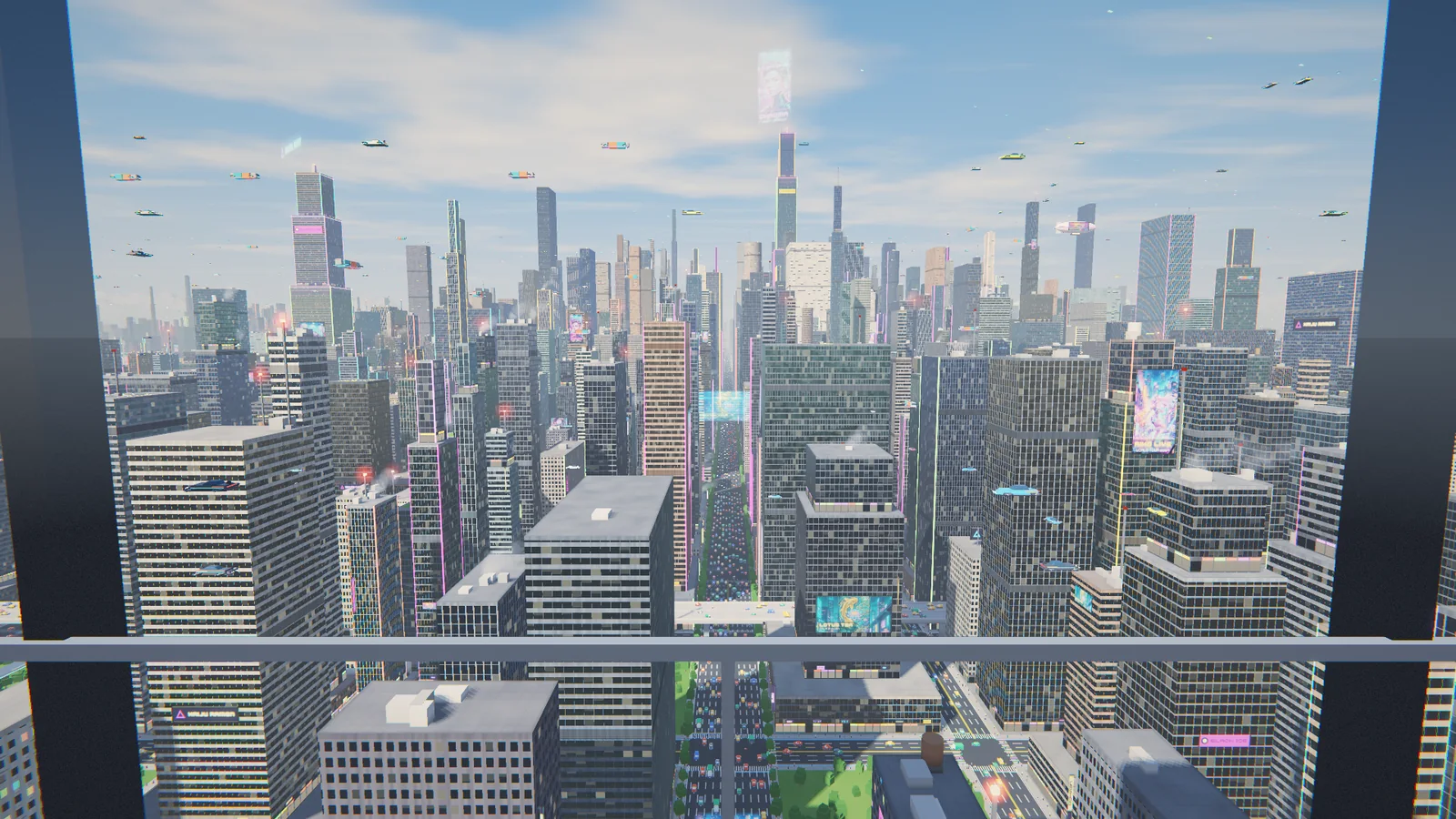
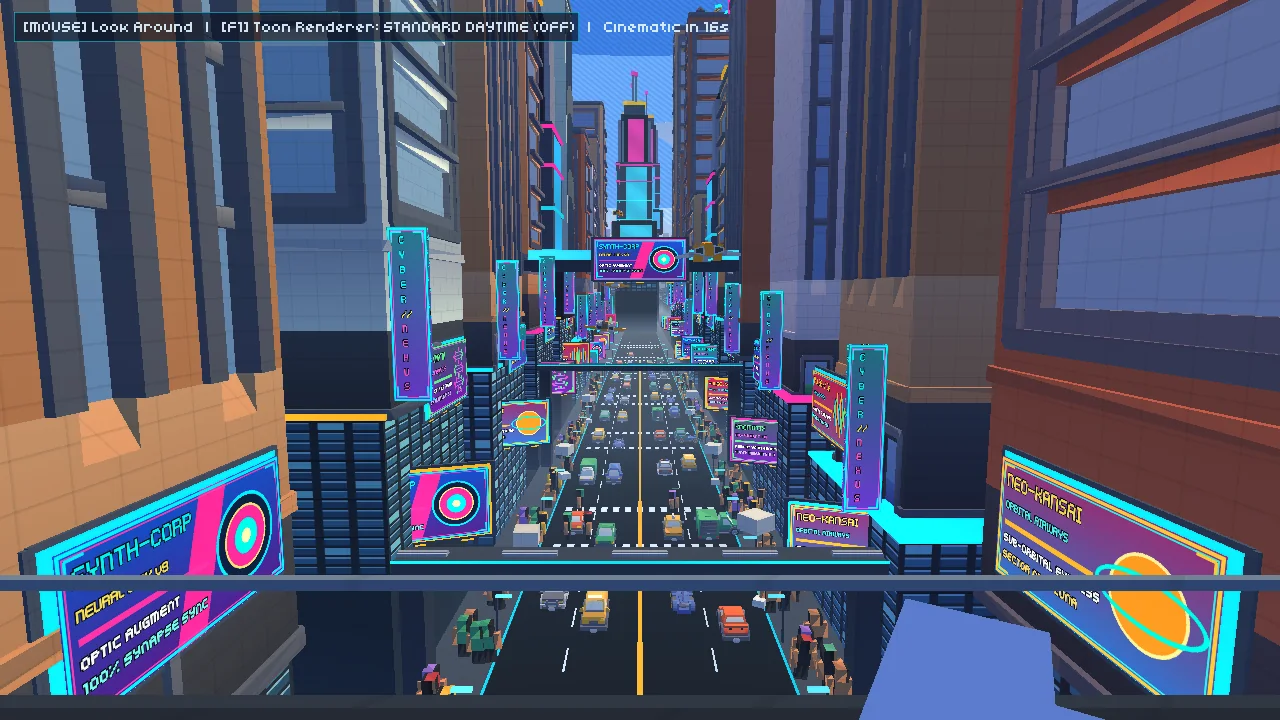
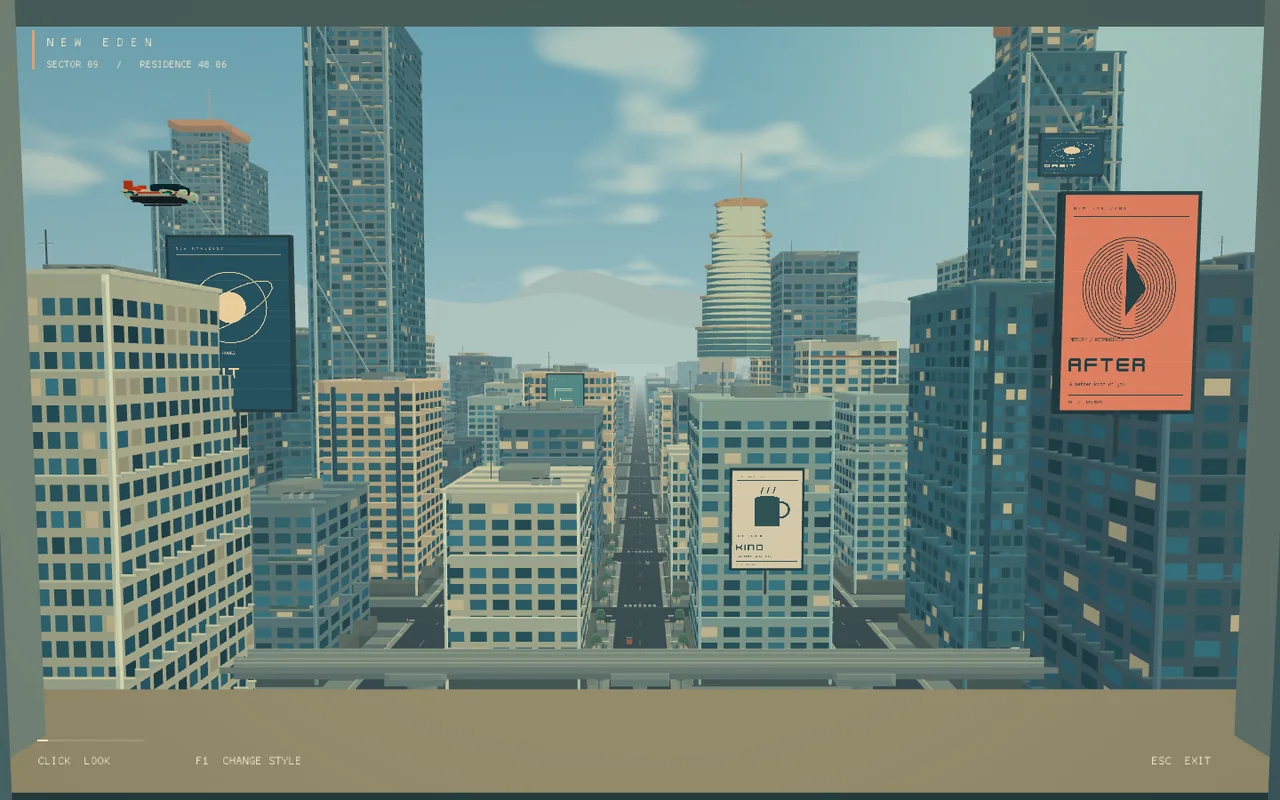
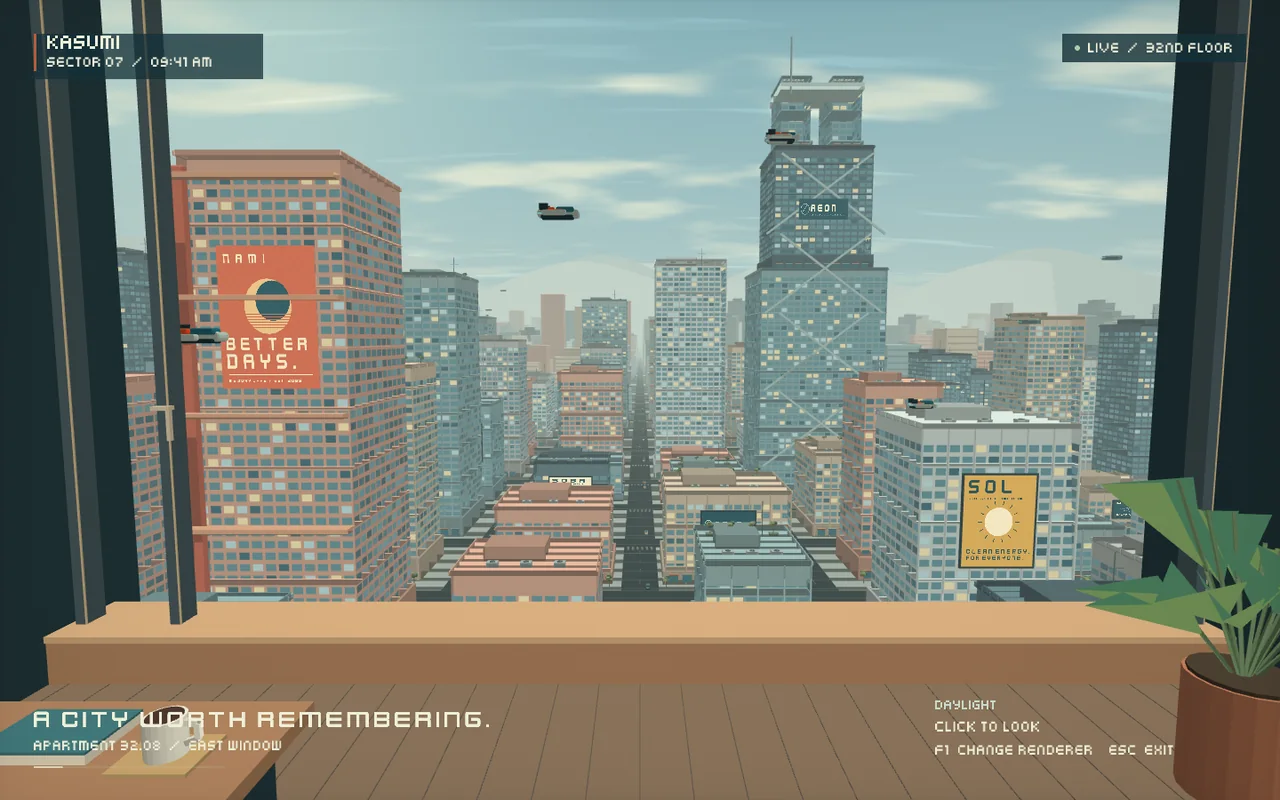
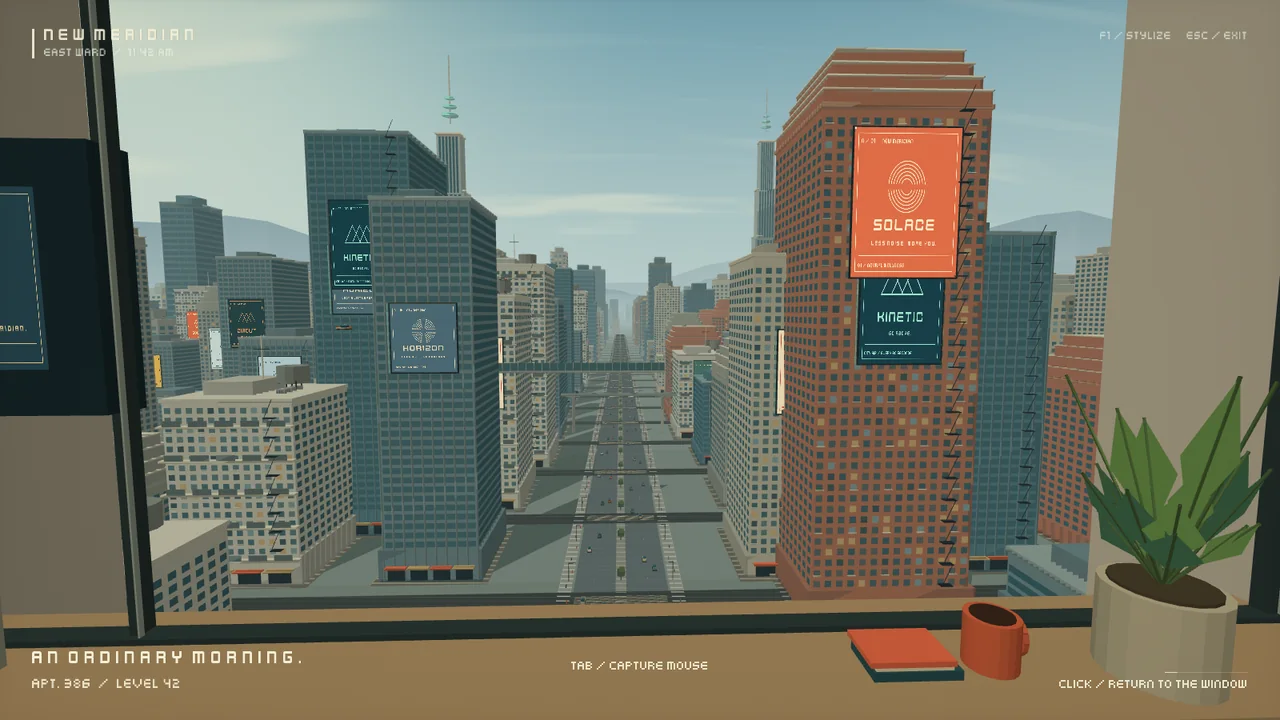
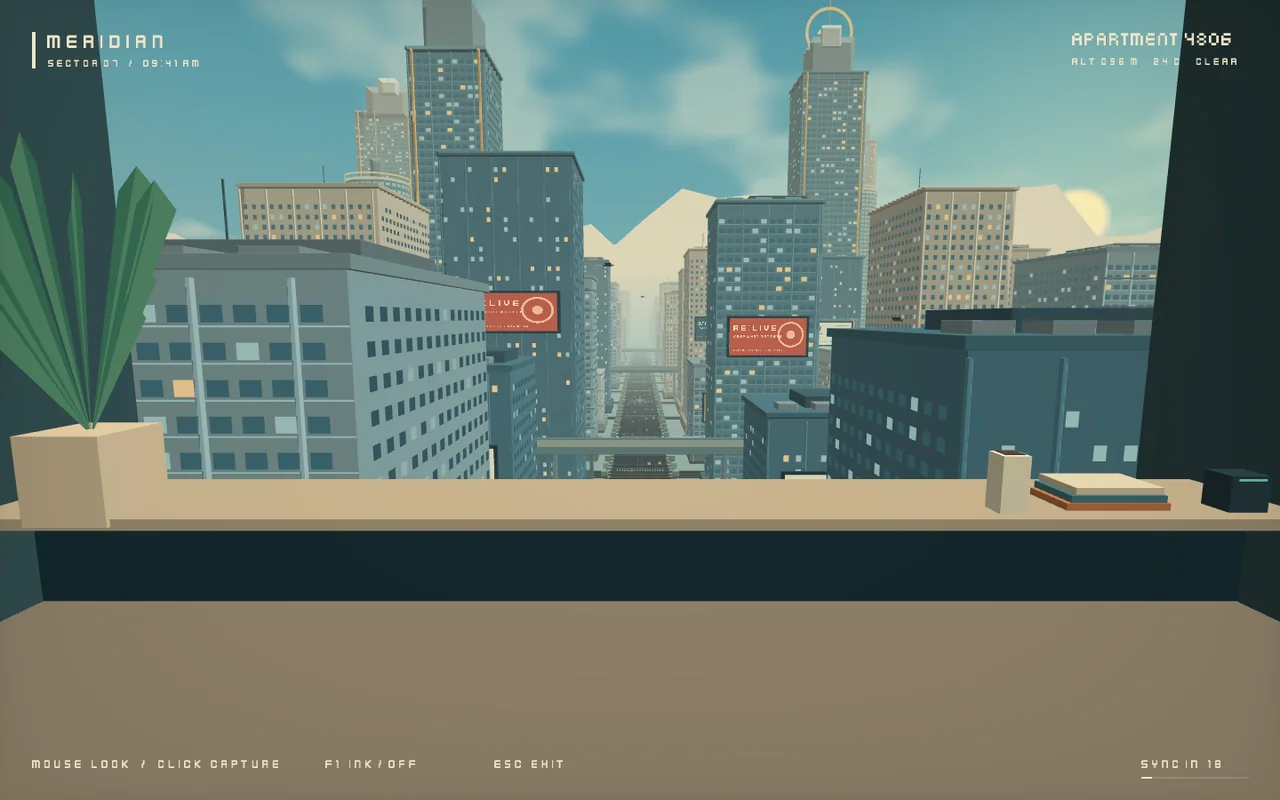
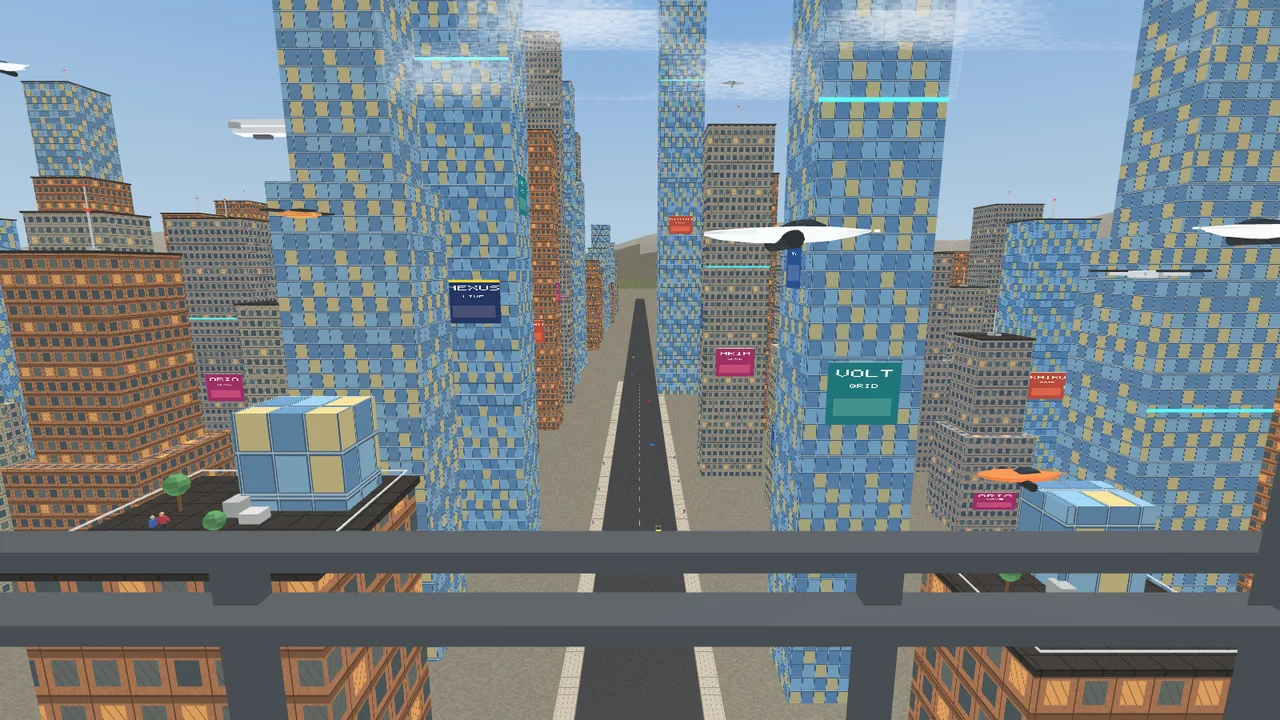
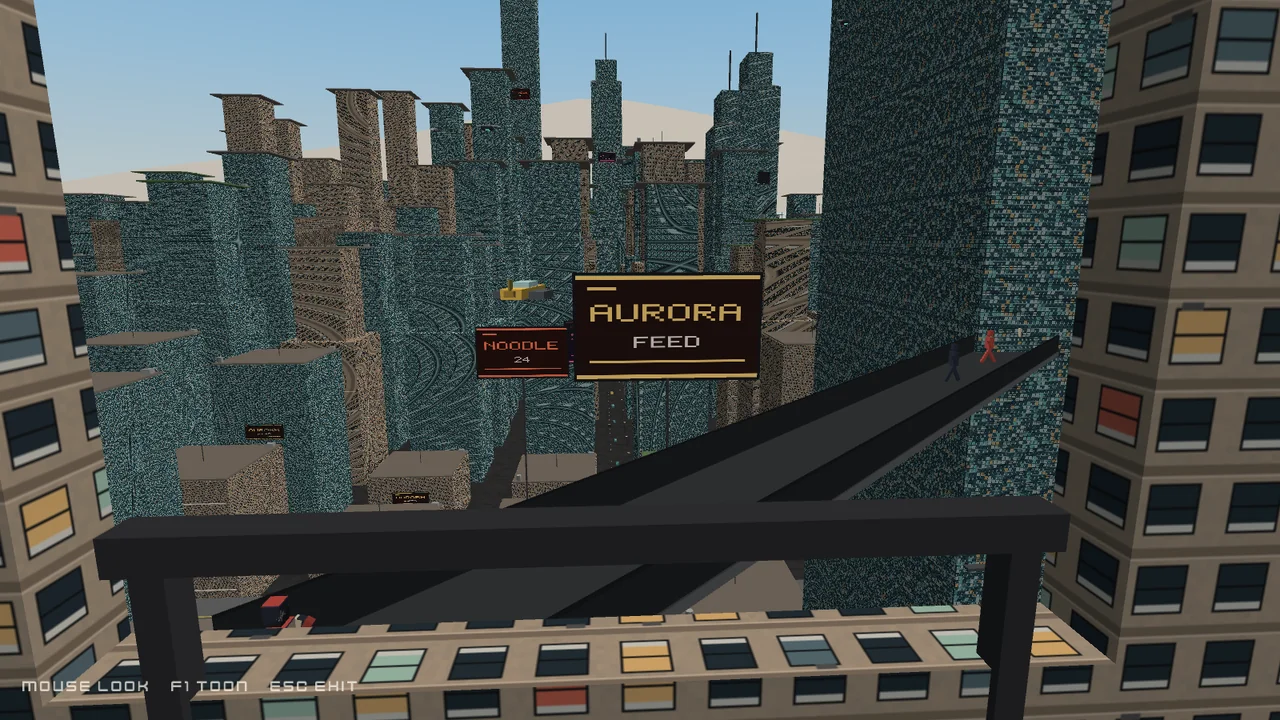
Before factoring in speed, Opus 5.5 scored a nearly perfect 39 / 40 across Styling (10), Creativity (9), Task Completion (10), and Coherence (10), losing a single point only because Gemini 4 Argon poured so much soul into its custom-modeled world that it claimed the 10 / 10 Creativity cap (36 / 40 before speed). Once completion times are folded in, Gemini's 22-minute speed advantage narrows the gap to a razor-thin 8.6 vs. 8.4.
| Rank · Model & Harness | Styling | Creativity | Task | Coherence | Speed | Final | Elapsed | Rust LOC | Scene & Pipeline Highlights |
|---|---|---|---|---|---|---|---|---|---|
| 1. Opus 5.5 · Claude Code | 10/10 | 9/10 | 10/10 | 10/10 | 4/10 | 8.6 | 56m 38s | 3,979 | 70k procedural buildings, 6,500 ads (8 AI-generated), 42k cars, 41k peds, 2× SSAA HDR + normal/depth toon pass |
| 2. Gemini 4 Argon · Copilot | 8/10 | 10/10 | 10/10 | 8/10 | 6/10 | 8.4 | 34m 09s | 3,400 | Lower “in-the-city” floor view, hand-crafted trucks/taxis/cars/citizens, monorail crossing, 6 AI ad billboards, full room furniture |
| 3. GPT-6 Astra · Codex | 5/10 | 6/10 | 10/10 | 7/10 | 9/10 | 7.4 | 19m 30s | 1,670 | 1,853 buildings, 176 cars, 100 peds, 5-car train, 12 Blender shuttles; cohesive but grey palette; clipped ORBIT sign |
| 4. GPT-6 Astra · Copilot | 6/10 | 6/10 | 10/10 | 7/10 | 7/10 | 7.2 | 31m 09s | 2,118 | 3,647 buildings, coral comm tower, terraced arcology, 23 Blender couriers, complex potted house-plant, great vanishing point |
| 5. GPT-6.1 Sol · Copilot | 5/10 | 6/10 | 10/10 | 6/10 | 8/10 | 7.0 | 22m 09s | 2,010 | 2,454 buildings, 17 Blender air taxis, 7-car train, elegant apartment interior; floating tower top & protruding fire escapes |
| 6. GPT-6.1 Sol · Codex | 4/10 | 5/10 | 10/10 | 5/10 | 10/10 | 6.8 | 17m 42s | 1,356 | Fastest run; clean depth/fog and Blender air-taxi fleet, barebones room interior, solid baseline ready for extension |
| 7. Grok 4.7 · Grok CLI | 2/10 | 4/10 | 9/10 | 3/10 | 3/10 | 4.2 | 85m 10s | 3,398 | Slowest by far; hit scene elements in code but sparse/missing street life in view, low texture & scene coherence |
| 8. Grok 4.7 · Copilot | 1/10 | 2/10 | 10/10 | 2/10 | 5/10 | 4.0 | 48m 20s | 2,736 | Inverted mouse look, 8-armed bugged pedestrians on skybridge, severe moiré distortion, unreadable black-blob toon pass |
experiment_1_results.md and harness logs.Final score (out of 10)
Average of Styling, Creativity, Task Completion, Coherence, and Speed.
View as table
Visual quality vs. clock time
4-category quality average (ex-speed) against elapsed minutes.
View as table
Looking across the five model families, a clear progression emerges in how each model interpreted “daytime urban metropolis + flying cars + advertisements”:
- Grok 4.7 struggled with basic 3D scene construction and shader math on both harnesses—either taking 85 minutes to produce a flat, sparse blockout (Grok CLI) or introducing severe moiré aliasing, inverted mouse controls, and a Sobel filter that blacked out its own buildings (Copilot CLI).
- GPT-6.1 Sol built clean, well-engineered daytime cities in 18–22 minutes, but its color palettes read as standard modern downtowns rather than cyberpunk.
- GPT-6 Astra was the first model family to start evoking cyberpunk in daylight—introducing arcologies, skybridges, comm spires, and deliberate color palettes—landing solidly in the 7.2–7.4 tier.
- Gemini 4 Argon and Claude Opus 5.5 broke away from the pack with two completely different creative visions: Gemini dropped the camera lower into the urban canyon and filled both the apartment and the street with hand-crafted voxel/indie life (8.4), while Opus went 55 floors up and wrote 1,066 lines of custom GLSL shaders to render a breathtaking, sun-drenched cyberpunk megacity (8.6).
Eight parallel runs from 13:59 to 15:25 EDT
All eight runs were launched within a three-minute window between 13:59:31 and 14:03:00 EDT on Sunday, October 18. The timeline below is reconstructed directly from each harness's telemetry: Codex's rollout-*.jsonl logs, GitHub Copilot CLI's events.jsonl, Claude Code's session transcript, and Grok CLI's events.jsonl.
Experiment_1 run timeline · Oct 18, 2026 (EDT)
From initial prompt to final completion turn. Hover any bar for exact clock times, tool calls, and speed rank.
View as table
Elapsed time (minutes)
Sorted fastest (10/10 Speed) to slowest (3/10 Speed).
View as table
Rust code written (lines)
Digital Reset scene crate (excluding build artifacts).
View as table
Three patterns jump out from the session logs:
- Codex was the fastest harness for both OpenAI models. GPT-6.1 Sol finished in 17m 42s on Codex (51 tool calls) vs. 22m 09s on Copilot CLI (68 tool calls). GPT-6 Astra finished in 19m 30s on Codex (43 tool calls) vs. 31m 09s on Copilot CLI (88 tool calls). However, the extra minutes on Copilot CLI went into richer scene geometry: Astra's Copilot build doubled the building count (3,647 vs. 1,853) and scored higher on visual styling (6/10 vs. 5/10).
- Opus 5.5 used the full tool suite—including AI ad generation. While most runs drew procedural signage in code, Opus called the workspace's image-generation server in the background to create 8 custom cyberpunk advertisement artworks (ramen, cyber-optics, synth idol, androids, flying cars, neon koi), baked two 4096² shadow cascades, and ran six rounds of self-critique on its own 1920×1080 captures before wrapping up at 56m 38s.
- Grok CLI ran for 85 minutes and compacted its own context. Launched first at 13:59:31, Grok 4.7 on Grok CLI spent nearly 50 minutes iterating on Blender prop scripts and texture generators, hit its 355k-token context threshold mid-run (triggering two compaction segments), and didn't finish until 15:24:41.
Eight windows onto the same brief
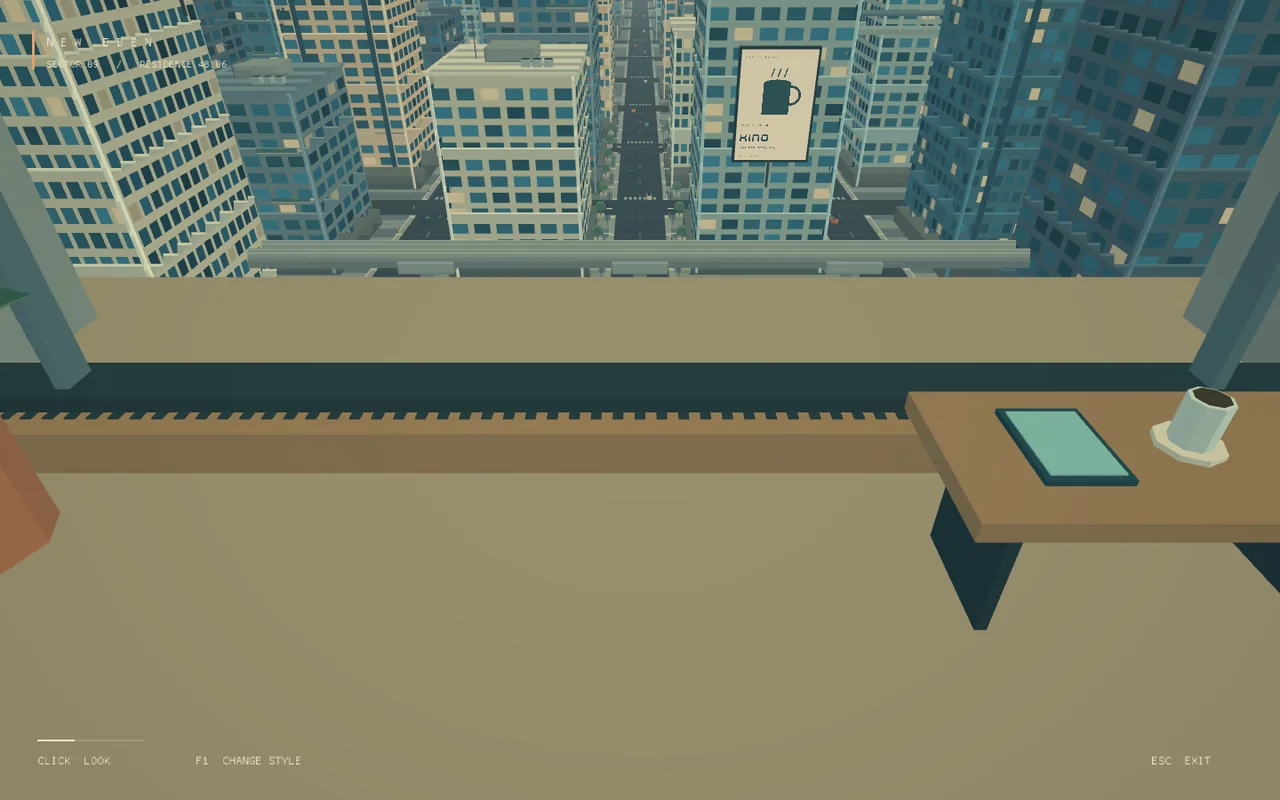
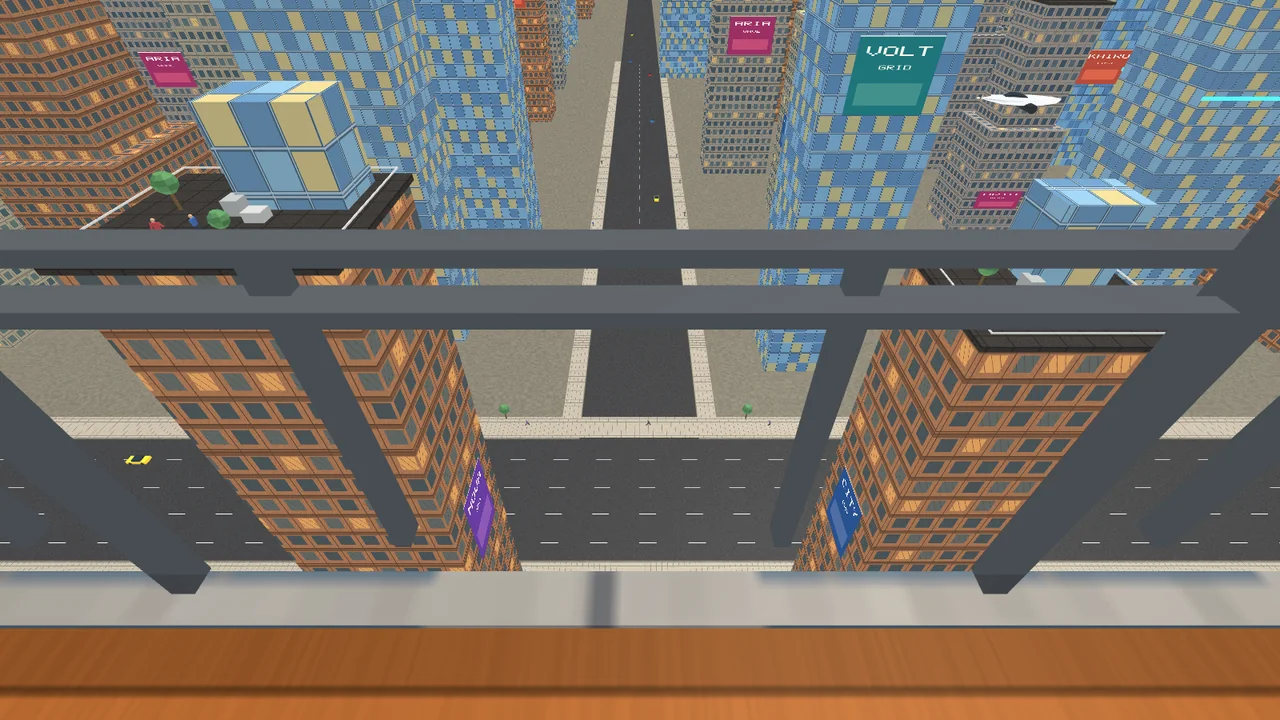
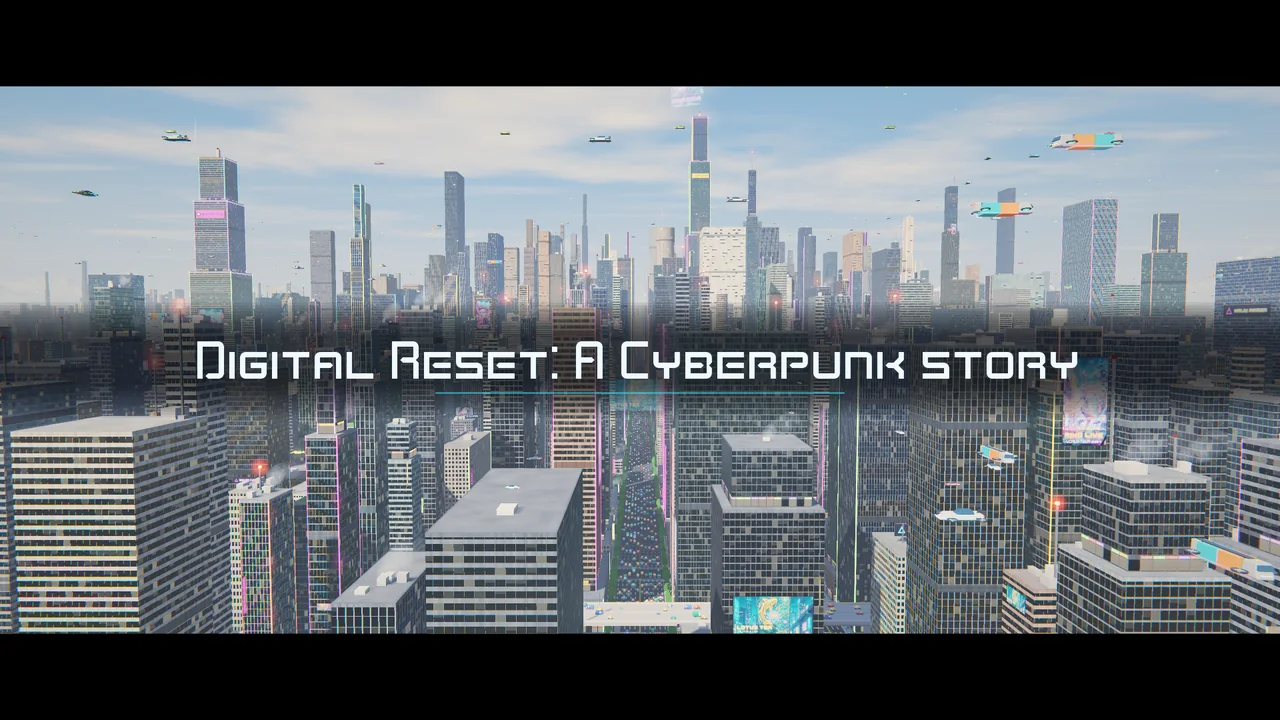
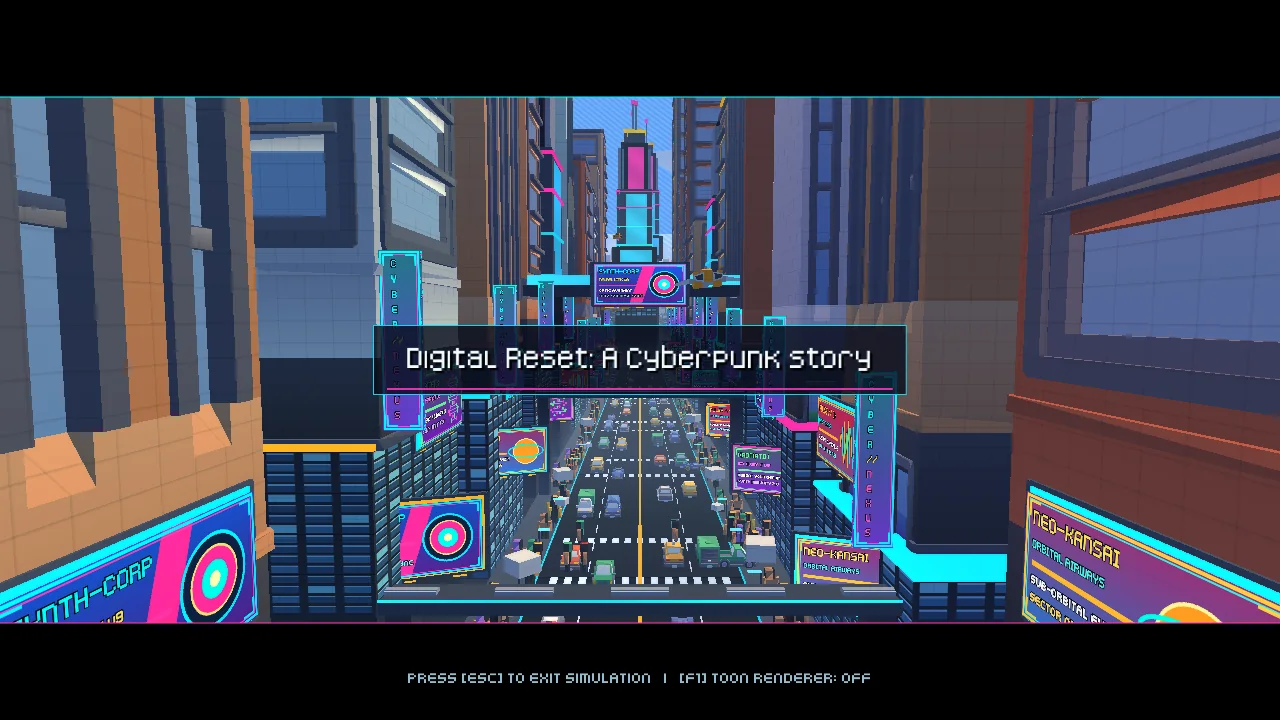
Every model built a self-contained native Windows OpenGL executable in Rust + macroquad 0.4, verified headless Blender 5.2.1 MCP asset export, implemented the 20-second camera push-in with letterbox bars and centered “Digital Reset: A Cyberpunk story” title, and wired F1 to toggle a full-scene stylized renderer. Switch tabs below to compare all eight runs across each phase of the spec, or click any image to inspect it full-screen.
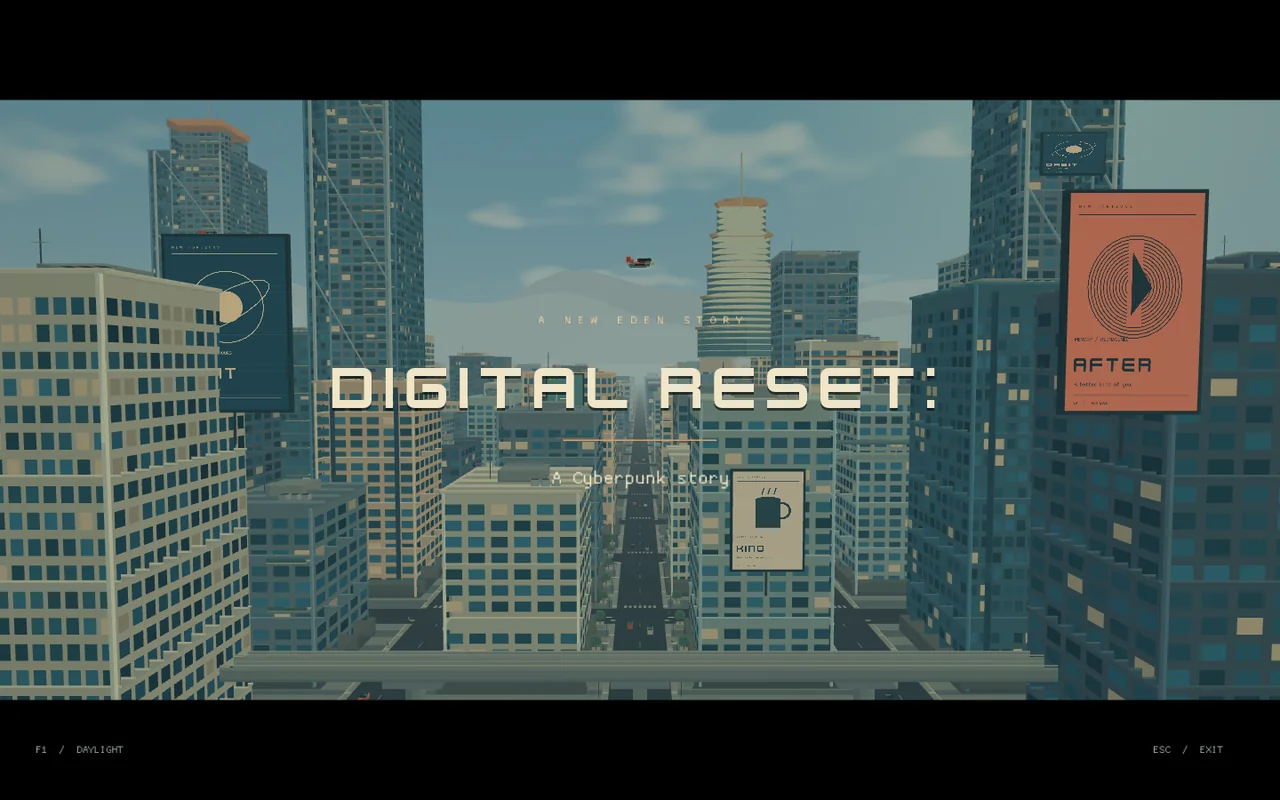
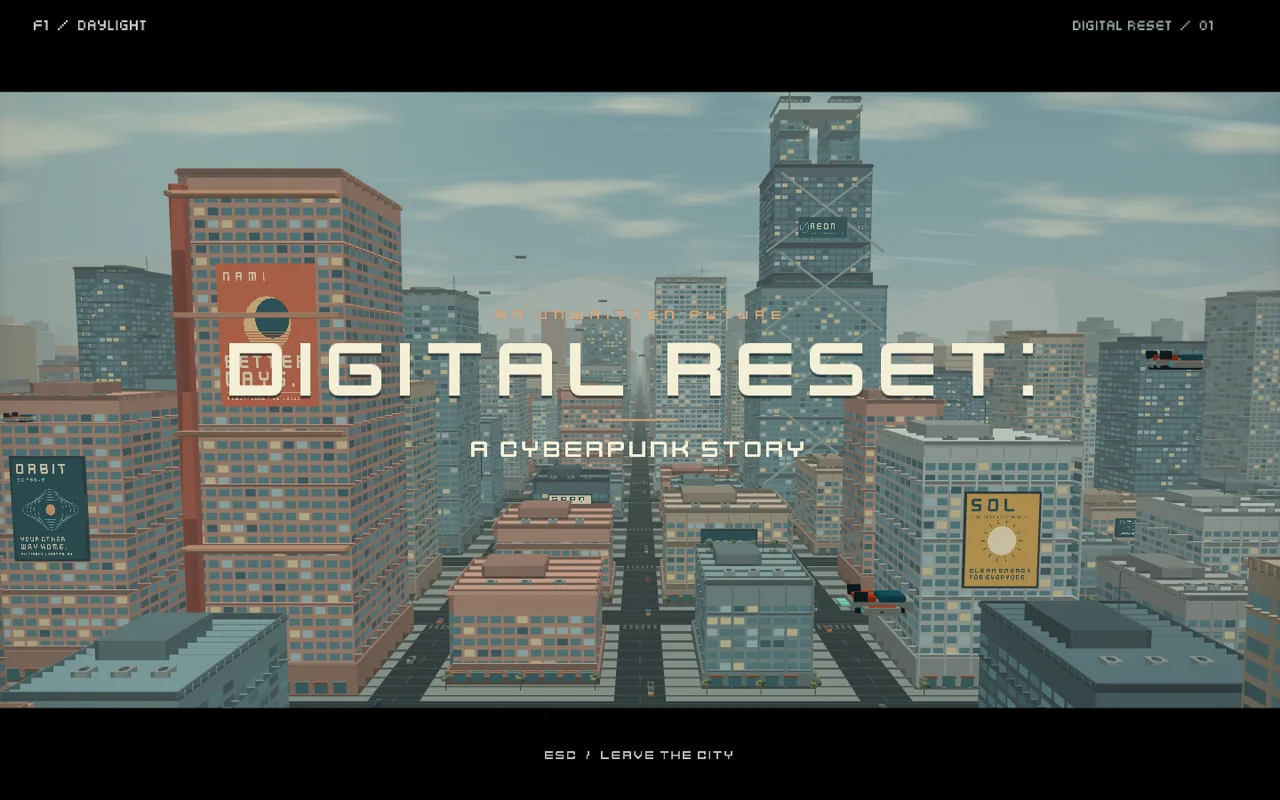
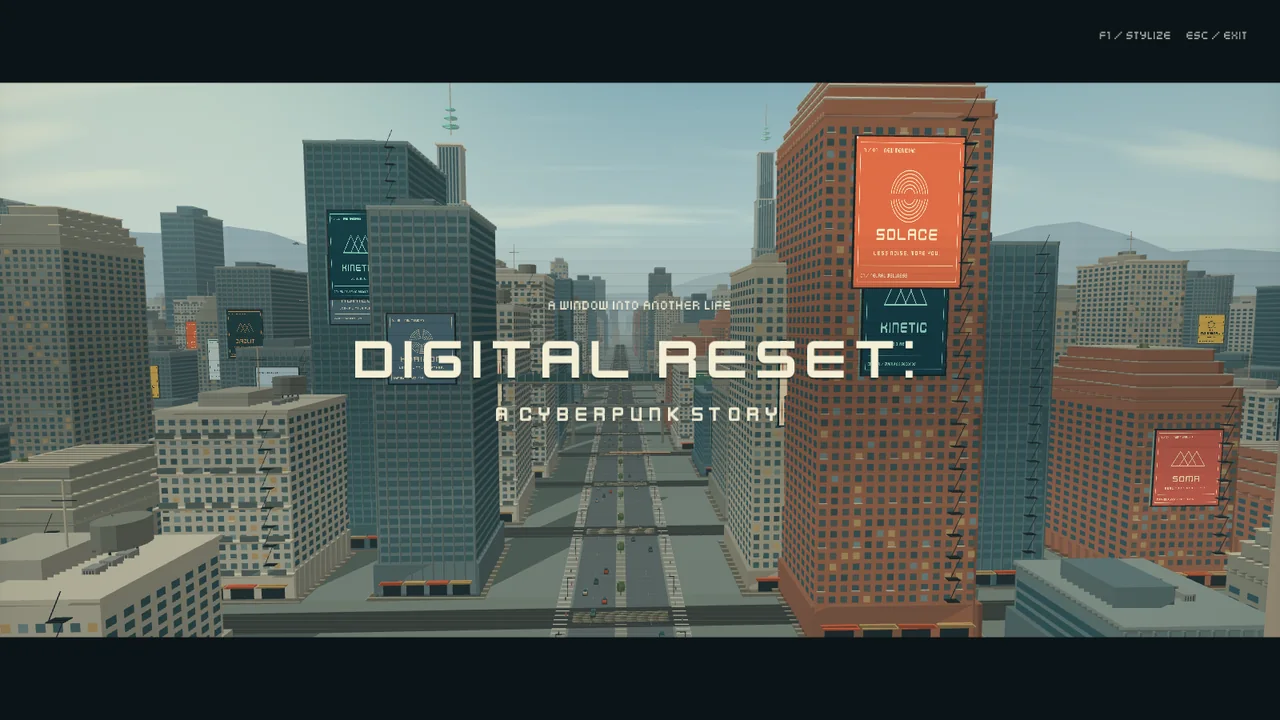
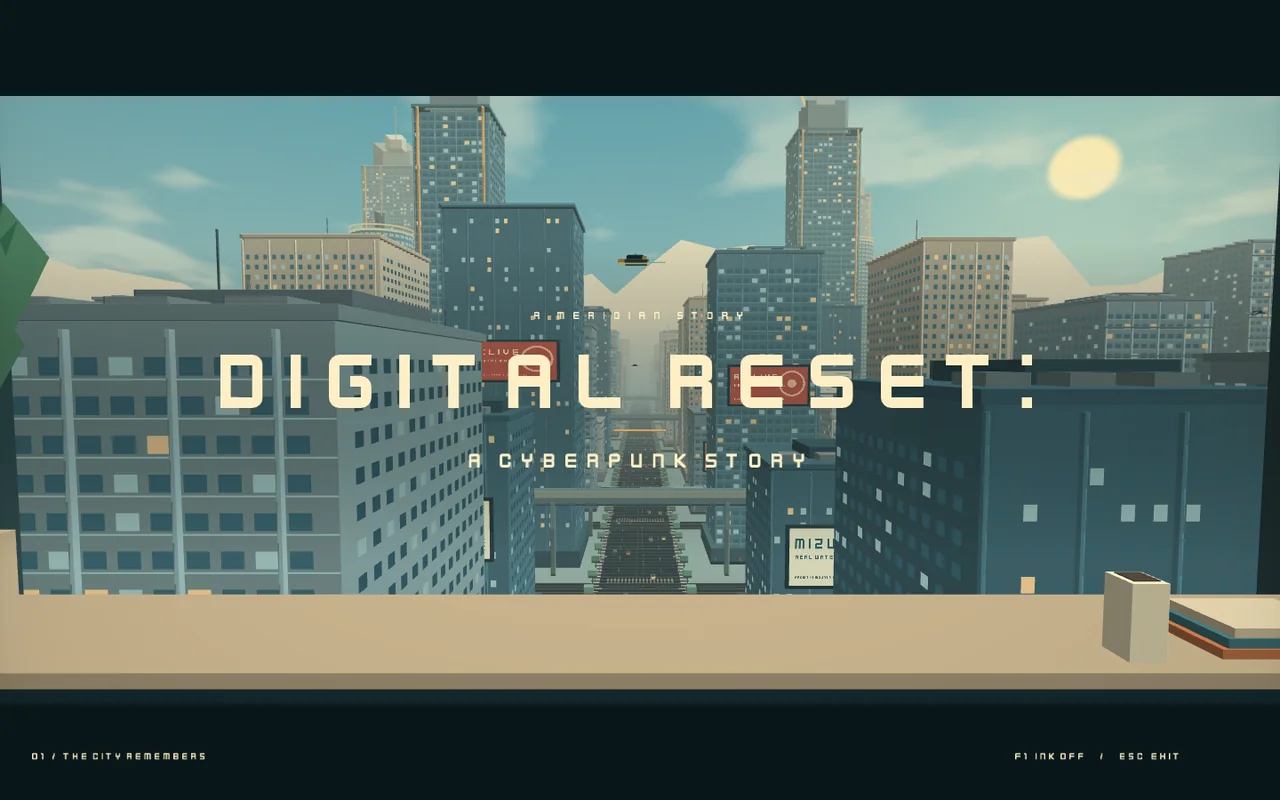
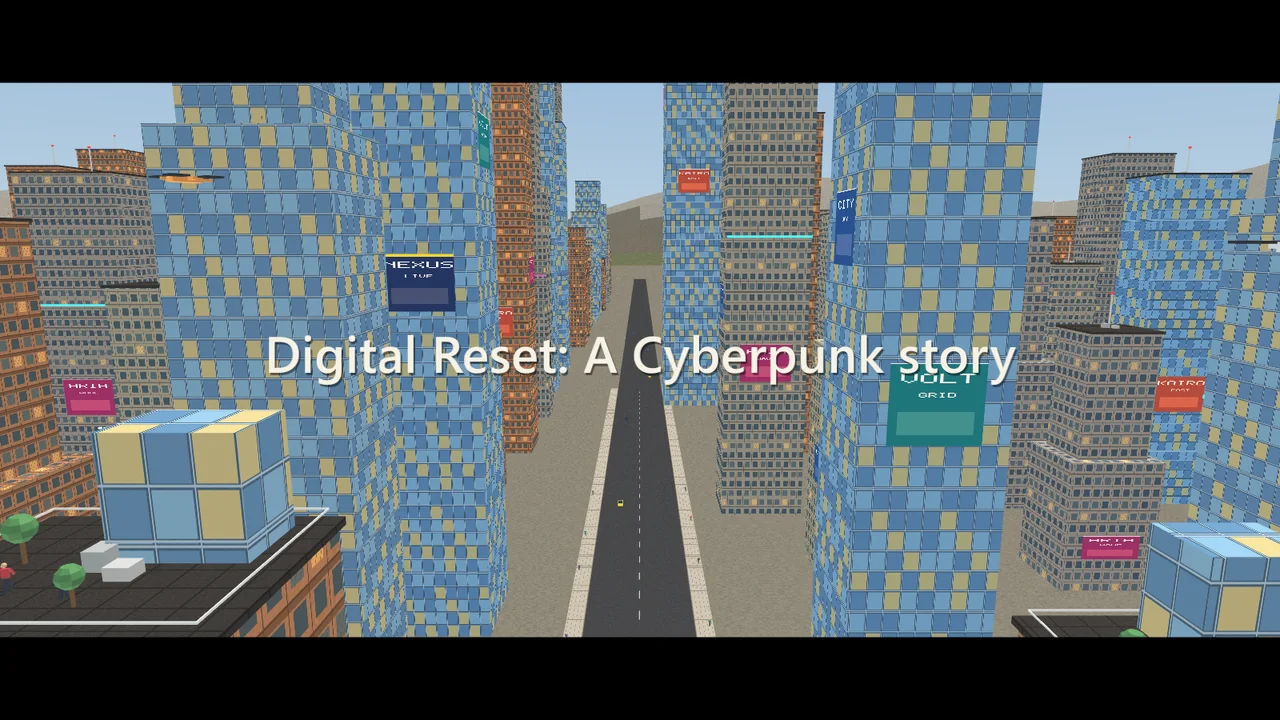
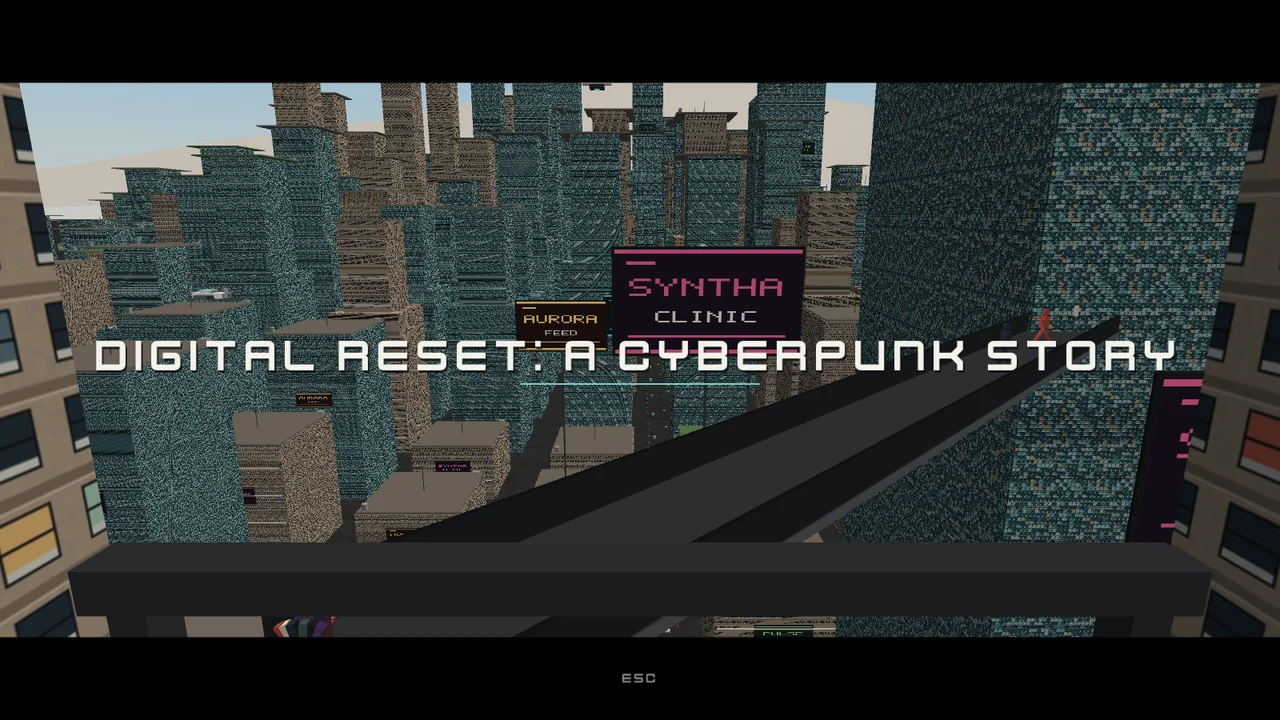
Kenney Future.ttf (which lacks distinct lowercase glyphs, turning the title all-caps).Interactive sliders: Daylight vs. F1 Toon & Opus vs. Gemini
Drag the sliders below to inspect how the top two models handled the F1 stylized rendering pass—and how differently Opus 5.5 and Gemini 4 Argon framed the exact same prompt:
Opus 5.5 · Daylight
Opus 5.5 · F1 Toon
Gemini 4 Argon · Daylight
Gemini 4 Argon · F1 Toon
1st · Opus 5.5 (8.6/10 · Styling 10)
2nd · Gemini 4 Argon (8.4/10 · Creativity 10)
All eight runs, reviewed in full
Below are my direct evaluation notes and scores from experiment_1_results.md for each of the eight runs, paired with what each agent built under the hood.
Claude Opus 5.5 · Claude Code
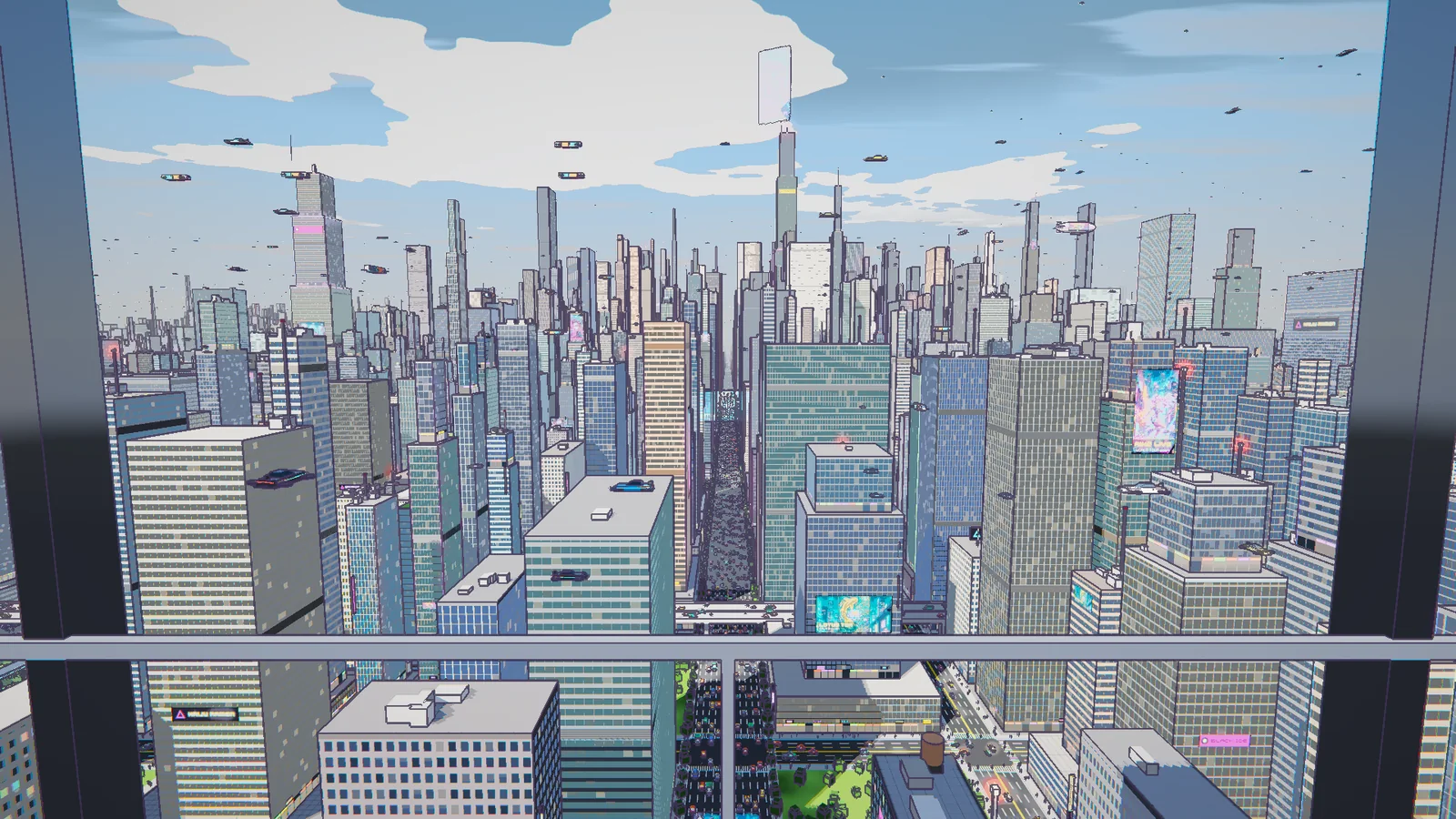
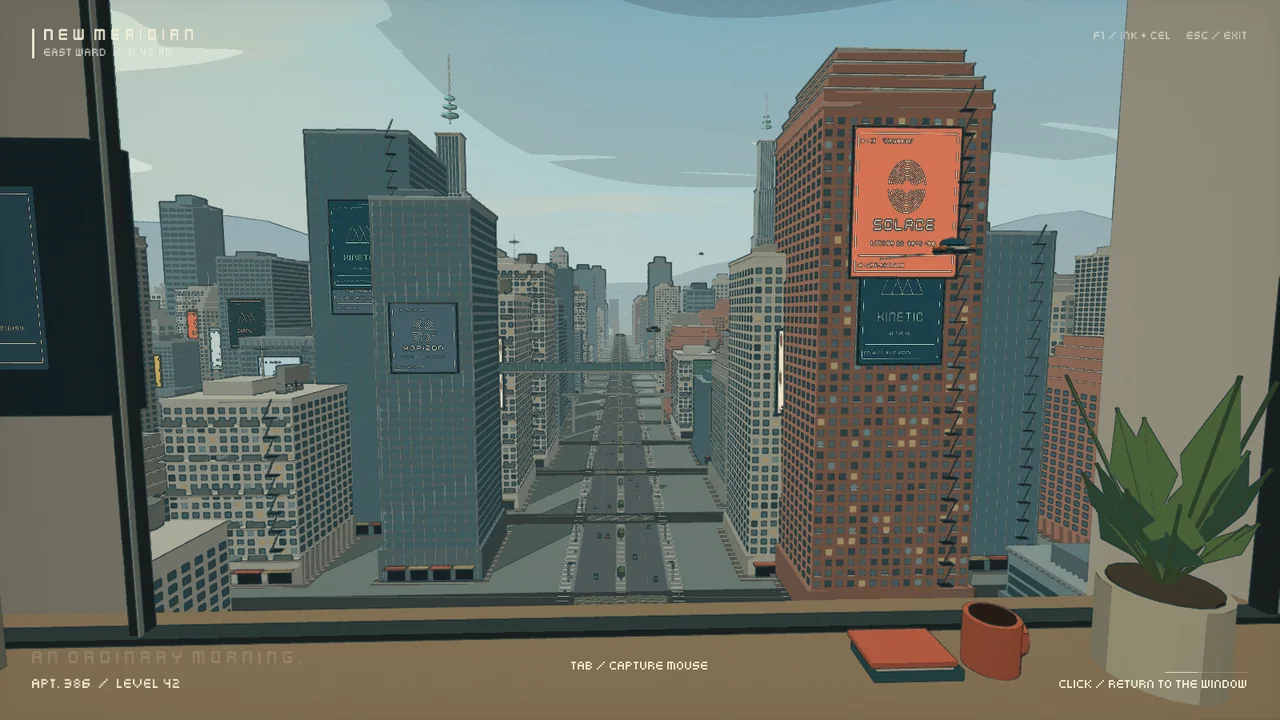
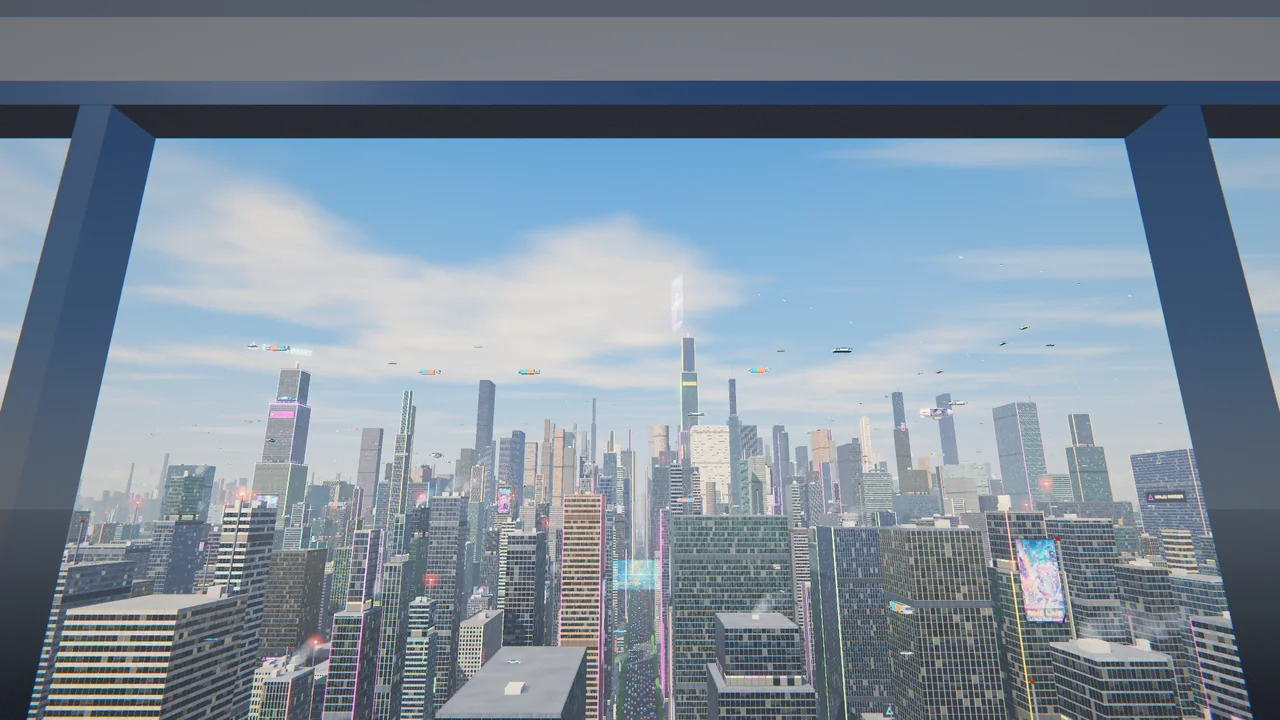
Opus delivered something staggeringly beautiful and cyberpunk. It was able to apply the generic building textures in an appealing way. The city scale features a large variety of building structures and the more narrow and tall structures we expect of a modern city. There's busy avenues filled with cars. There's an overpass filled with cars. The advertisements look suitably cyberpunk with transparency and glow. Buildings have rooftop lights. Hand-modeled flying vehicles criss-cross. Excellent use of depth makes the city look gigantic. The room itself has very elegantly put together hardwood floors and furniture. Toon rendering works. Opus just misses the creativity cap due to Gemini pouring its soul into that area. This city gives the strongest “put on your jacket, grab your gun, we're going to go investigate something across town.”
- Under the hood
- 3,979 lines of Rust (1,066 lines of GLSL shaders), 70k building blocks + 7 megatowers up to 880m, two 4096² shadow cascades, 8 AI-generated ads in a 4096² atlas, Blender
flycar.obj&hauler.obj, 2× SSAA HDR + ACES tonemap.
Gemini 4 Argon · Copilot CLI
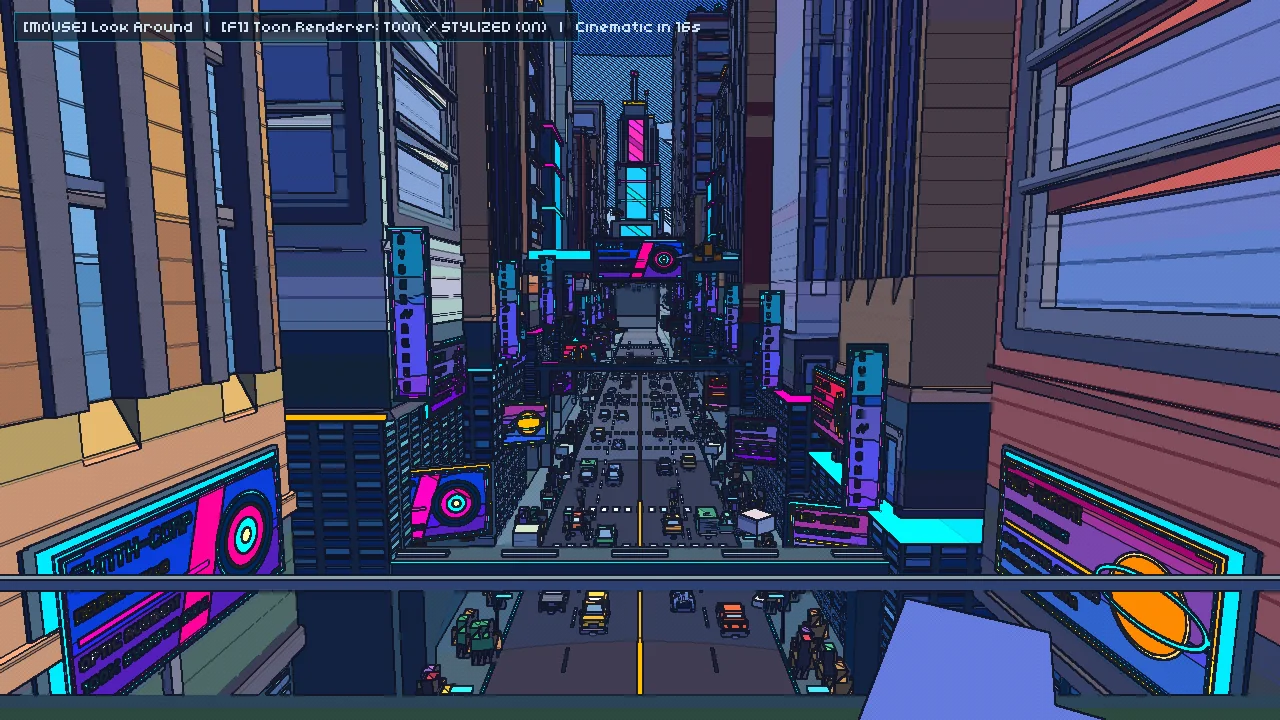
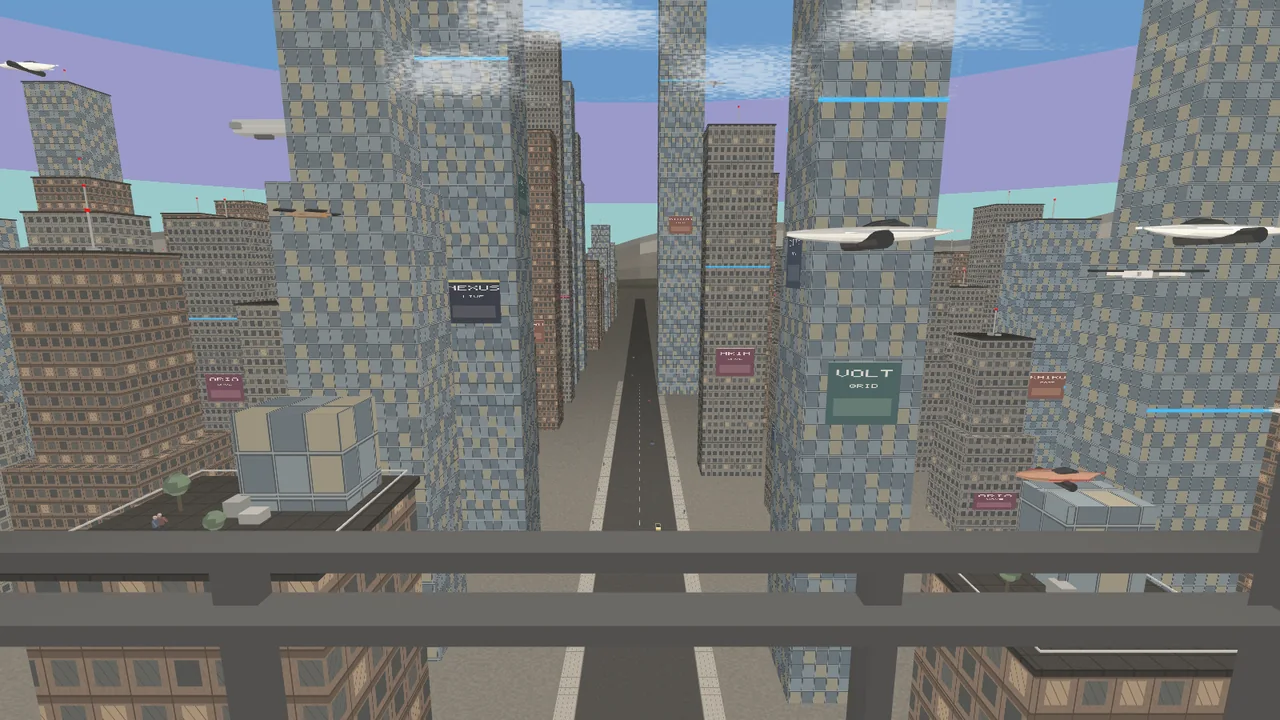
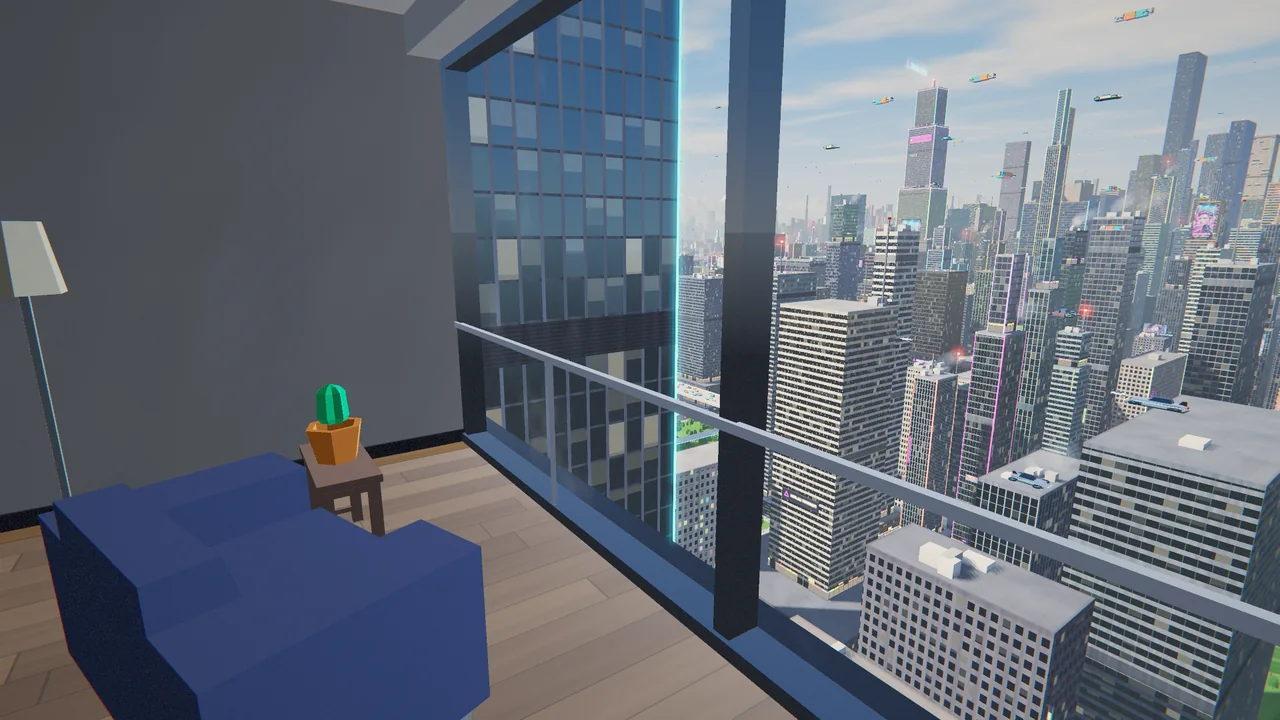
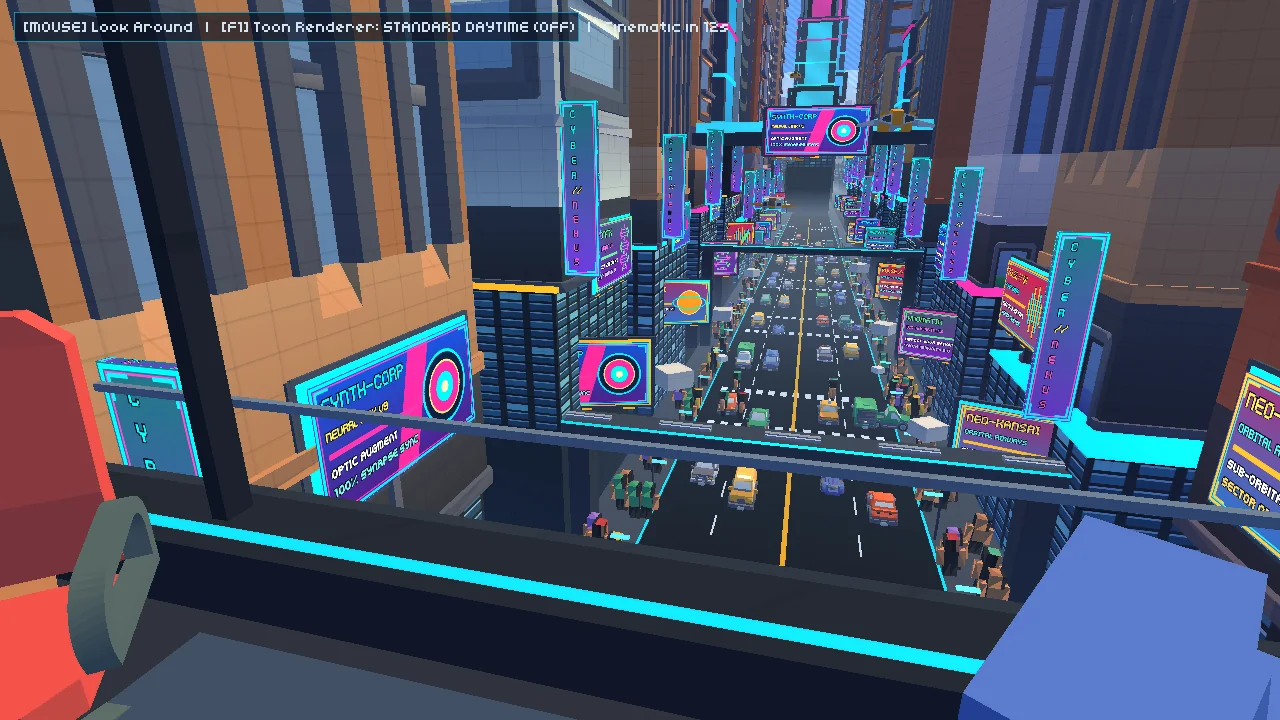
Gemini was surprising and delivered something distinct from all other models. The style is a bit Minecraft/indie game, but the sheer volume of detail is compelling. Numerous citizens walking around with different styles. Numerous vehicles of different types (trucks/taxis/cars). Rail system with a train crossing. Variety of different aerial vehicles which swoop around. Buildings that are genuinely very different from each other. A room full of furniture. All models were hand-crafted. While I'm not a fan of the child-like art direction, Gemini gets very high marks for creativity, quality, and coherence. The avenue is filled with a variety of advertisements. Toon rendering works as expected. Overall, this would be a strong starting point for further work. Gemini was the only model to choose a more “in the city” camera view and much lower in the “high-rise” apartment.
- Under the hood
- 3,400 lines of Rust (
world.rsis 2,076 lines), 168 tool calls across 75 turns, Blender MCP exports (cyber_megatower.obj,cyber_spinner.obj,cyber_holo_rig.obj) + 6 AI-generated ad textures.
GPT-6 Astra · Codex
First model to start evoking “cyberpunk.” Flying cars, interesting city design and layout. Advertisements. Horizon. The first model to start applying a palette to retain consistency. Unfortunately, it makes everything very grey. A few visual errors: ad clipped in a building (ORBIT on the left), rail to nowhere. Toon renderer works fine. Overall a good starting point, but still a bit overly generic looking.
- Under the hood
- 2nd fastest run (19m 30s, 43 tool calls). 1,670 lines of Rust, 1,853 building volumes (1.02M static vertices), 176 cars, 100 peds, 5-car train, 12 Blender AER-7 shuttles (3,020 tris), 4× MSAA offscreen target.
GPT-6 Astra · Copilot CLI
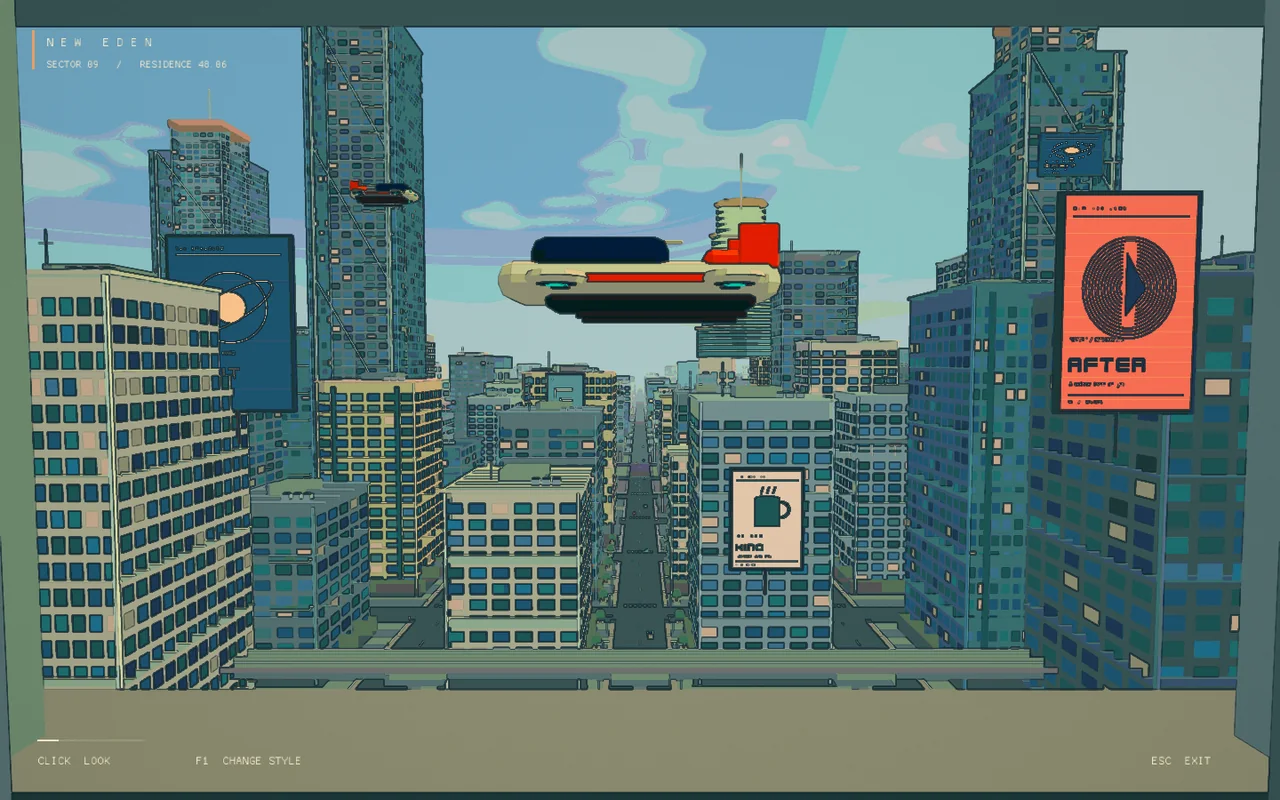
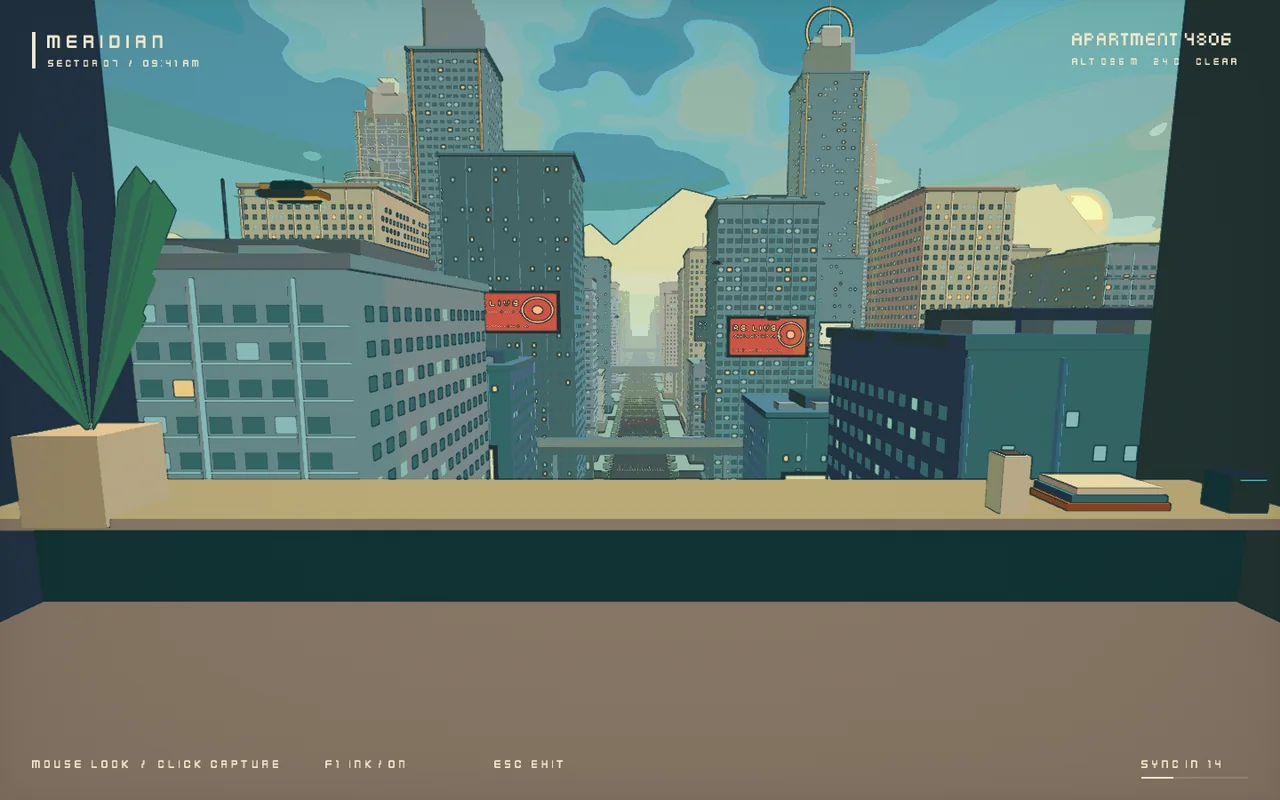
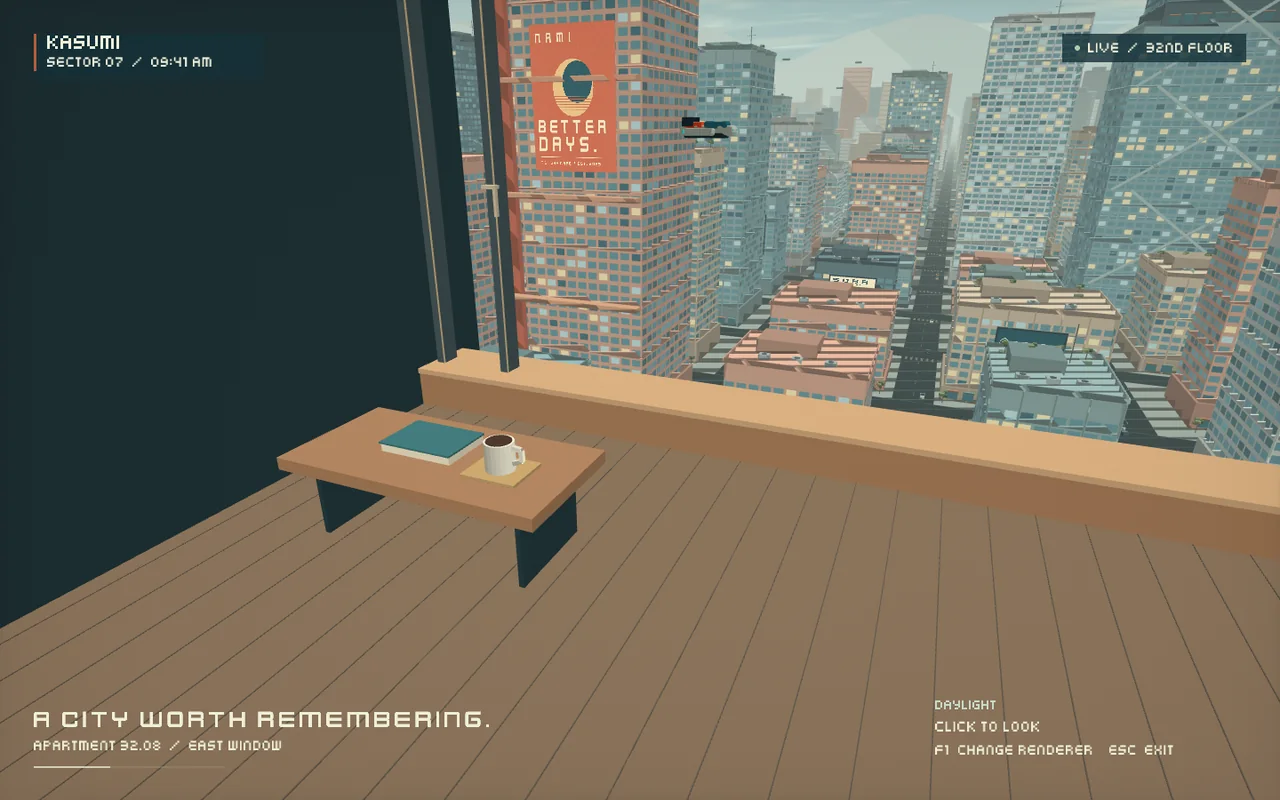
Scene composition works well with interesting buildings and layout, flying cars, and color distribution. The room even has a complex house-plant model. Overall, hits the mark for a massive city (good use of fog, vanishing point, distant structures, clouds, horizon). Toon renderer works fine. Mountains on the horizon look a little generic.
- Under the hood
- 2,118 lines of Rust, 3,647 deterministic buildings, coral comm tower, terraced split-crown arcology, 160 road vehicles, 105 pedestrians, 6-car train, and 23 Blender-modeled flying couriers.
GPT-6.1 Sol · Copilot CLI
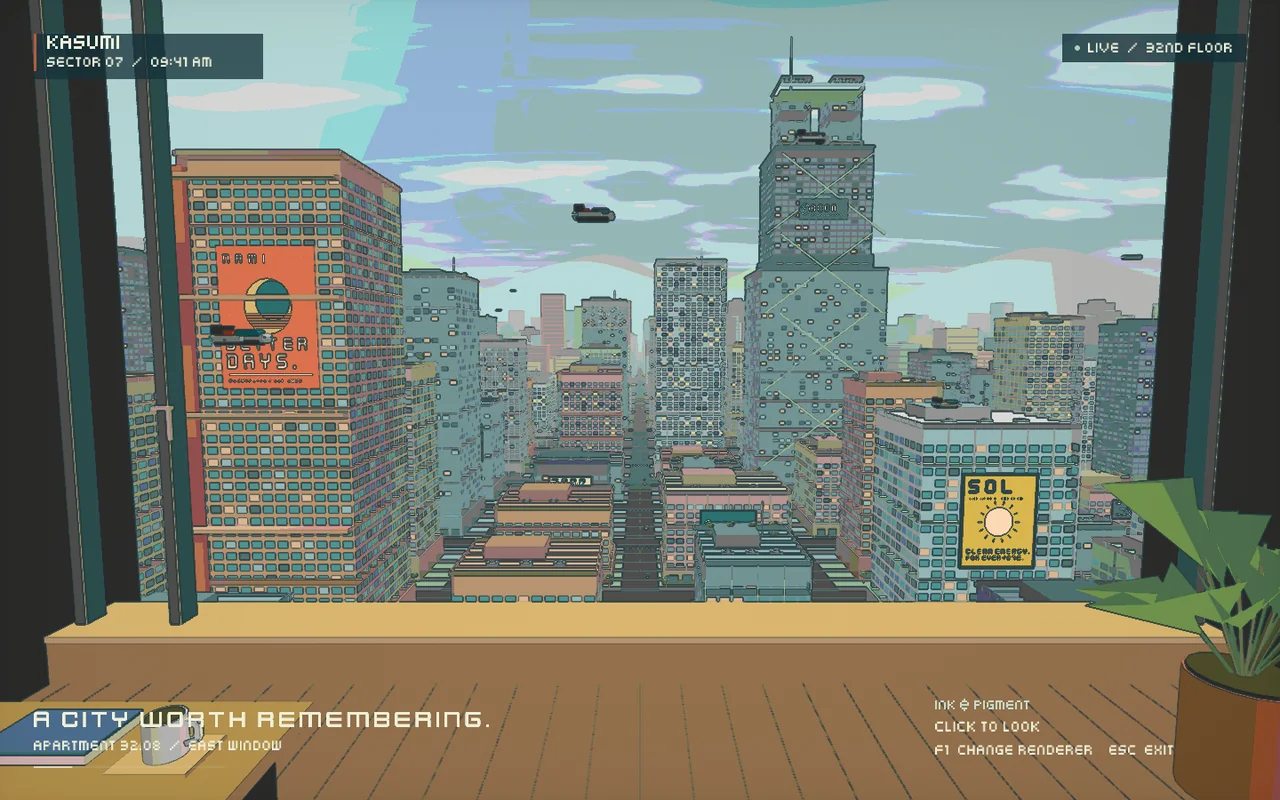
Visually interesting, but doesn't quite evoke cyberpunk—more like a standard urban city. Good use of textures and building variety. Cars and people on the boulevard. Some scene construction mistakes (top of towers floating, fire escapes extending too far). Good use of varying geometry on rooms for variety. Elegant apartment interior. Overall no issues, but slightly bland in color/vibe. Clean toon renderer.
- Under the hood
- 3rd fastest run (22m 09s, 68 tool calls). 2,010 lines of Rust, 2,454 buildings (838k vertices), 17 Blender air taxis, 7-car elevated train, Pillow-generated signage atlas, and crosshatched cel shader.
GPT-6.1 Sol · Codex
Fastest to complete (17m 42s). Visually middle of the road. Good use of depth, fog, and building sizes. Moving cars. Flying cars (modeled in Blender). Barebones apartment interior, but usable. Skybridge or rail approximation. Mountains and horizon look fine. Toon renderer works fine. Overall it hit everything to a quality level where it could be extended or used. Not exciting.
- Under the hood
- 1st in Speed (17m 42s, 51 tool calls). Most compact codebase in the field at 1,356 lines of Rust across 4 files, averaging ~119 FPS in its 26-second verification pass.
Grok 4.7 · Grok CLI
Took the longest by far (1h 25m 10s). Least visual styling despite a vast amount of time on asset generation and other nuances. Hit all scene elements, but textures and scene coherence are low. Missing cars or people down below from the normal view. Overall very basic. Toon renderer is passable but uninteresting.
- Under the hood
- 3,398 lines of Rust across 8 files. Spent nearly 50 minutes before writing
Cargo.toml, compacted context twice at 355k tokens, and placed street actors far enough below the sill that they only appear when pitching steeply down.
Grok 4.7 · Copilot CLI
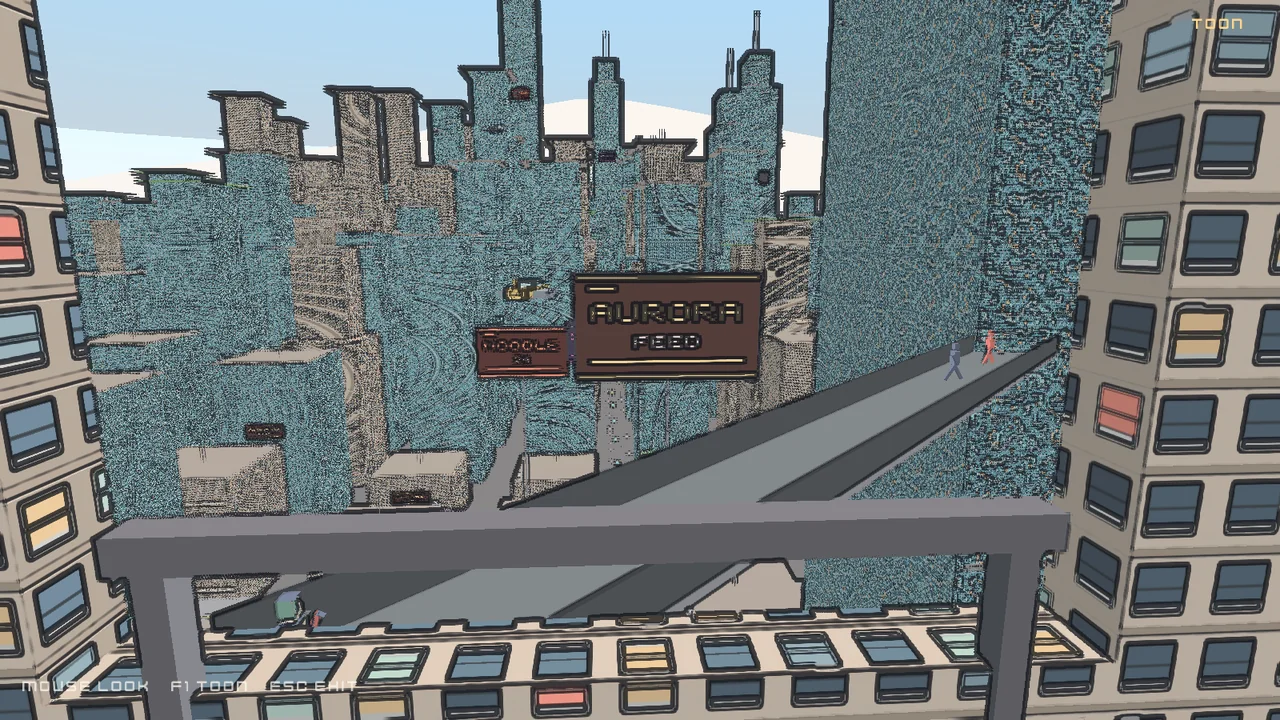
Mouse directions inverted. Visual mess. “People” rendered as a mess (with 8 arms—bugged, not creativity). Mass visual rendering distortion. Mess to look at. Low composition. Creative skybridge implemented poorly. Poor use of textures. Building roofs poor. Interior of starting room is bare (a few cubes). No immersion. Flying cars and ads present. Toon renderer unusable/unreadable.
- Under the hood
- 2,736 lines of Rust (182 tool calls). Three compounding bugs: opposite signs on mouse delta vs. camera yaw/pitch, pedestrian arms rotated around the hip pivot (
y = 0.78), and a 3.4 px Sobel edge filter over un-mipmapped window grids.
Why Grok-GHCP had inverted mouse look, 8-armed people, and black toon buildings
Because every workspace is a clean Git repository with full source and Blender scripts, we don't have to guess why Grok 4.7 on Copilot CLI had three jarring runtime failures—each one is sitting in src/main.rs and src/models.rs:
- Inverted mouse look (
src/main.rs:172). Grok pointed its camera along+Zwith+Yup (vec3(yaw.sin() * pitch.cos(), pitch.sin(), yaw.cos() * pitch.cos())). In a right-handed coordinate frame facing+Z,+X(yaw > 0) points to the left, not the right—andmouse_delta_position()inmacroquadalready has inverted signs relative to screen-space pixel deltas. Worse, Grok wrote two branches inlook()with opposite signs to each other:
// Grok-4.7-GHCP/src/main.rs — two mouse-look branches with opposite signs
fn look(yaw: &mut f32, pitch: &mut f32, prev: &mut (f32, f32)) {
    let local = mouse_delta_position();
    let (mx, my) = mouse_position();
    let pix = vec2(mx - prev.0, my - prev.1);
    *prev = (mx, my);
    if local.length() > 0.00001 {
        *yaw -= local.x * 3.1;
        *pitch += local.y * 2.4;
    } else if pix.length() > 0.0 && pix.length() < 500.0 {
        *yaw += pix.x * 0.0024;
        *pitch -= pix.y * 0.0020;
    }
}- Eight-armed pedestrians on the skybridge (
src/models.rs:153). In Blender, Grok modeled each pedestrian's arms at shoulder height (y = 0.81..1.29) and legs at hip height (y = 0.03..0.81). Then in Rust, it rotated both arms and legs around a single hardcoded hip pivot ofpivot_y = 0.78—detaching the arms from the shoulders and swinging them outward from the waist like extra limbs, while stacking 10 overlapping pedestrians along the same diagonal skybridge line right in front of the window:
// Grok-4.7-GHCP/src/models.rs — arms (y=0.81..1.29) rotated around the hip pivot (0.78)!
let limb = if n.contains("leg_l") || n.contains("arm_r") { swing }
           else if n.contains("leg_r") || n.contains("arm_l") { -swing } else { 0.0 };
...
if limb != 0.0 {
    p = rot_x(p, 0.78, limb); // swings arms out from the waist + overlaps on skybridge
}- Black-blob toon buildings (
src/main.rs:330). Instead of running edge detection on a depth/normal buffer (like Opus 5.5) or smoothing procedural facade frequencies by distance, Grok ran a wide3.4 pxluminance Sobel filter directly over its un-mipmapped high-frequency procedural window textures. Every window mullion exceeded the gradient threshold, painting entire skyscrapers solid black whenF1was pressed.
1. Subtle prompts separate taste from templates
Mentioning “cyberpunk” only in the title card while requiring Daytime prevented models from hiding behind dark-screen neon glow. Opus 5.5 and Gemini 4 Argon built genuinely atmospheric worlds in broad daylight; weaker runs looked like generic office parks.
2. Shader craft vs. world-building
Opus 5.5 won on shader sophistication (1,066 lines of GLSL, cascaded shadow maps, normal/depth outlines, AI ad atlas). Gemini 4 Argon nearly caught it through pure world-building density (2,076 lines of hand-crafted vehicles, citizens, rail crossings, and room props).
3. Self-inspection only works if the model looks critically
Every run captured screenshots of its own build. Opus 5.5 and Gemini 4 Argon used their captures to fix haze, framing, and typography; Grok 4.7 on Copilot CLI captured toon.png with pitch-black buildings and signed off anyway.